



How to read fire extinguisher pressure gauge
 Jun 16, 2026|
 View:9105
Fire extinguisher is one of the common fire extinguishing equipment. Many people may know how to use a fire extinguisher but do not know how to read afire extinguisher pressure gauge.
What Is a Fire Extinguisher Pressure Gauge?
A fire extinguisher pressure gauge is an important safety component installed on fire extinguishers to monitor the internal pressure level.
It helps users quickly determine whether the fire extinguisher is ready for operation. By checking the position of the gauge pointer, users can identify whether the pressure is within the normal range, too low, or too high.
Most fire extinguishers, including dry powder fire extinguishers, water-based fire extinguishers, foam extinguishers, and clean agent extinguishers, are equipped with a pressure gauge to ensure reliable performance during emergency situations.
A high-quality fire extinguisher pressure gauge should provide:
Accurate pressure indication
Stable pointer movement
Good sealing performance
Long service life
Reliable pressure monitoring
How Does a Fire Extinguisher Pressure Gauge Work?
A fire extinguisher pressure gauge usually works based on the mechanical deformation principle of a sensing element.
The common working process includes:
The internal pressure of the fire extinguisher enters the gauge.
The sensing element, usually a Bourdon tube, deforms under pressure.
The mechanical movement converts the deformation into pointer movement.
The pointer displays the pressure condition on the dial.
Through this simple mechanical structure, users can easily check whether the fire extinguisher pressure is within the safe operating range.
For professional fire safety equipment manufacturers, the accuracy and reliability of the pressure gauge are essential because incorrect pressure readings may affect the performance of the fire extinguisher.
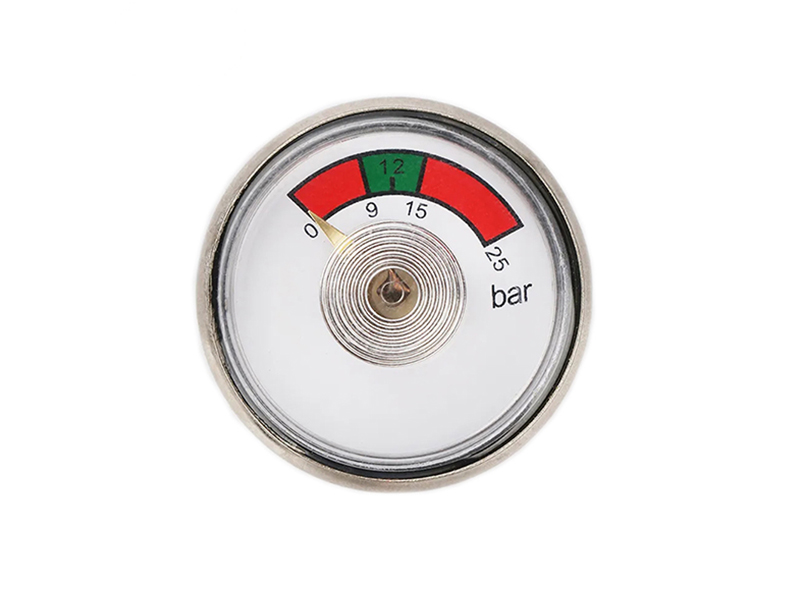
How to read fire extinguisher pressure gauge?
The green zone is the normal operating range used by most manufacturers during production and filling. Regular inspection of the pressure gauge helps ensure that the fire extinguisher remains ready for emergency use.
Fire Extinguisher Pressure Gauge Color Meaning
| Gauge Area | Pressure Condition | Meaning | Recommended Action |
|---|---|---|---|
| Green Area | Normal Pressure | The fire extinguisher pressure is within the safe working range. | Can be used normally. |
| Red Area | Low Pressure | The pressure may not be enough to discharge the extinguishing agent. | Recharge or replace the extinguisher. |
| Yellow Area | High Pressure | The pressure is higher than the normal range and may create safety risks. | Check and maintain immediately. |
The indicator of the fire extinguisher pressure gauge in the red area indicates that the pressure is too low and cannot be sprayed, indicating that the pressure is faulty and needs to be replaced or refilled. The pointer in the green area is normal and can be used normally. The pointer in the yellow area indicates that the pressure is too high and dry powder can be sprayed, but there is a danger of explosion and explosion. For fire extinguishers in this state, it is best to go to a regular fire extinguishing equipment store to replenish dry powder. The yellow grid area is a hazardous area used by manufacturers when producing or maintaining fire extinguishers. Normally, regular manufacturers will fill the green grid area. As mentioned above, if the pointer is in the yellow grid area, the pressure is too high. This is dangerous, but it does not mean it is invalid when used.
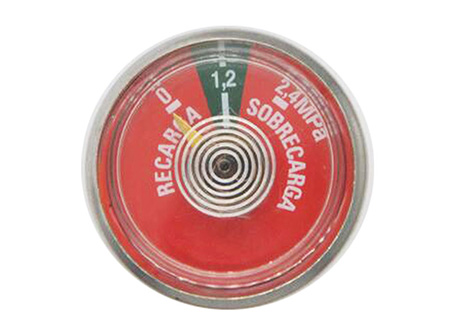
For most fire extinguishers, whether it is water-based, dry powder, clean gas, etc., the fire extinguisher is usually equipped with a fire extinguisher pressure gauge to check whether the pressure in the bottle meets the requirements. Once a leak occurs, the pressure will drop, making it impossible to extinguish the fire normally. In the daily fire safety inspection, whether the pressure gauge pointer of the fire extinguisher is in the green normal area is one of the inspection items of the fire extinguisher.
What should the pressure gauge be on a fire extinguisher?
The fire extinguisher pressure gauge is a key component to monitor the internal pressure state. In normal temperature and pressure, the pointer of the fire extinguisher pressure gauge should be in the green area, indicating that the internal pressure of the fire extinguisher is moderate, and the fire extinguisher is in the normal working state, and it can be used safely and effectively. If the fire extinguisher pressure gauge hand comes to the red area, this means the internal pressure of the fire extinguisher is too low to spray the fire extinguishing agent normally; if the point to the yellow area, indicating the internal pressure of fire extinguisher too high, high pressure, there may be a safety hazard. So, it is an important step to check the pressure gauge of the fire extinguisher regularly, to ensure that it is within the normal pressure range, so that the fire extinguisher can play the role of effective use in emergency situations.
How to check fire extinguisher pressure?
To test the pressure on a fire extinguisher you must, Firstly, look closely at the pressure gauge located right on the handle side of the fire extinguisher. Used, the fire pressure pointer point to the pointer should point to the green area, shown on the right; If the pointer points towards the red area, it shows that there is less pressure in the fire extinguisher, it may not spray properly. It needs to be in the yellow area, that is, without explosion hazard, if it points to the yellow area, you can still use it normally, but explosion hazard will exist. So to regularly check the fire extinguisher pressure is the key link to ensure its normal work.
Types of Fire Extinguisher Pressure Gauge
Different fire extinguisher applications may require different types of pressure gauges.
Dry Fire Extinguisher Pressure Gauge
Dry pressure gauges are commonly used for standard fire extinguishers.
Features:
Simple structure
Cost-effective
Easy installation
Suitable for general fire protection equipment
Liquid Filled Fire Extinguisher Pressure Gauge
Liquid filled gauges are designed for applications requiring better stability.
Advantages:
Excellent vibration resistance
More stable pointer movement
Longer service life
They are suitable for fire extinguishers used in industrial environments or areas with vibration.
Customized Fire Extinguisher Pressure Gauge
Professional manufacturers can provide customized solutions according to customer requirements.
Customization options include:
Pressure range
Dial design
Connection size
Logo printing
Material selection
FAQ About Fire Extinguisher Pressure Gauge
What does the green area mean on a fire extinguisher pressure gauge?
The green area indicates that the internal pressure of the fire extinguisher is within the normal operating range and the extinguisher can usually be used safely.
Why is my fire extinguisher pressure gauge in the red area?
The red area usually means the pressure is too low. The extinguisher may not discharge properly and should be inspected, refilled, or replaced.
Can a fire extinguisher pressure gauge be replaced?
Yes. Damaged or inaccurate pressure gauges can be replaced with compatible models from professional pressure gauge suppliers.
What pressure should a fire extinguisher gauge show?
Under normal conditions, the pointer should remain in the green area. The exact pressure depends on the extinguisher type and manufacturer specifications.
Can fire extinguisher pressure gauges be customized?
Yes. Manufacturers can customize pressure ranges, dial designs, connection types, materials, and branding according to customer requirements.
Looking for a Reliable Fire Extinguisher Pressure Gauge Supplier?
KB provides professional pressure gauge solutions for fire safety equipment manufacturers and distributors.
Our advantages include:
OEM and ODM service
Customized pressure gauge solutions
Strict quality inspection
Stable production capability
Global export experience
Contact KB for customized fire extinguisher pressure gauge solutions.




View More(Total0)Comment lists