The refrigeration pressure gaugeis used to measure the current pressure of the refrigeration system, which is mainly used to detect the different stages of the system's refrigerant pressure, to help users master the operation of the equipment.
What Is a Refrigeration Pressure Gauge?
A refrigeration pressure gauge is a specialized pressure measuring instrument used in refrigeration and HVAC systems to monitor refrigerant pressure during operation.
It helps technicians and engineers:
Check refrigerant pressure
Diagnose system problems
Control refrigerant charging
Maintain refrigeration efficiency
A refrigeration pressure gauge is widely used in:
Air conditioning systems
Refrigeration equipment
Chillers
Heat pumps
HVAC maintenance systems
A reliable refrigeration pressure gauge should provide:
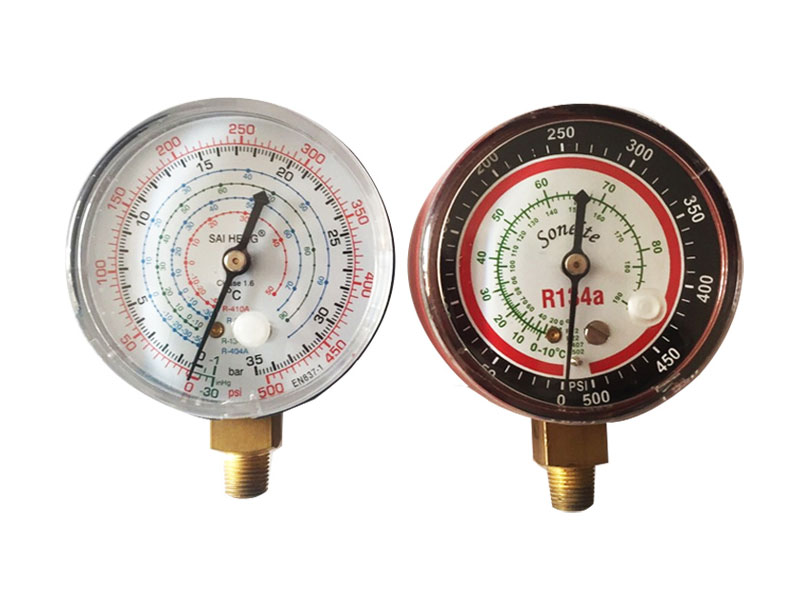
Refrigerating pressure gauges are generally divided into high-pressure gauges and low-pressure gauges, that is: general low-pressure gauges' highest reading value is 1.8 mpa or 18 bar, high pressure gauges highest reading value is 3.8 mpa or 38 bar.
Types of Refrigeration Pressure Gauge
1. Low Pressure Refrigeration Gauge
Low-pressure gauges are mainly used to measure suction pressure.
Typical applications:
Evaporator pressure monitoring
Refrigeration system diagnosis
Cooling system maintenance
Common pressure range:
2. High Pressure Refrigeration Gauge
High-pressure gauges measure discharge pressure after compression.
Applications:
Common pressure range:
3. Dual Pressure Refrigeration Gauge
Dual gauges combine:
Low-pressure gauge
High-pressure gauge
Advantages:
How Does a Refrigeration Pressure Gauge Work?
A refrigeration pressure gauge works by measuring the pressure of refrigerant inside the refrigeration system.
The basic working process includes:
Refrigerant enters the gauge through the connection port.
The internal sensing element detects pressure changes.
The Bourdon tube deforms according to the pressure.
The mechanical movement transfers the pressure change into pointer movement.
The dial displays the pressure value and corresponding temperature scale.
Most mechanical refrigeration pressure gauges use a Bourdon tube structure because of its accuracy and durability.
How to read the Refrigeration pressure gauge?
1. The value of the outer ring of the low-pressure gauge is the value of MPA. If the pointer reaches“3”, the current pressure is 0.3 MPa. The value of the second ring of the low-pressure gauge from the outer ring to the inner ring is 1KG/CM2.
2. The value of the bar in the inner red circle of the high-pressure gauge is the value of bar if the pointer points to“20”, that is, the current pressure is 20 bar.
Conversion of different pressure units
1MPa≈101kg/cm2≈10bar≈145Psi
How does the Refrigeration pressure gauge read the temperature?
1. Low-pressure meter, from outside to inside number.
The second circle of Blue R407C temperature value, unit ° C degrees Celsius. Lap 4 black R22 temperature value, unit ° C (Celsius)
If a chiller refrigerant use R22, the operation of low pressure 0.5 mpa corresponding condensation temperature of about 6 degrees.
If a chiller refrigerant use R134a, the operation of low pressure 0.3 mpa corresponding condensation temperature of about 9 degrees.
2. High-pressure meter, from inside to outside number.
Lap 1, black, pressure value, in MPA (MPa) or bar.
Lap 2, black, R404A temperature, unit ° C (Celsius).
Lap 3, blue, R134A temperature, unit ° C (Celsius).
Lap 4, green, R22 temperature value, unit ° C (Celsius).
If a chiller uses R22 refrigerant, operating high pressure of 1.8 mpa corresponding condensation temperature of about 50 degrees.
If a chiller uses R134a refrigerant, operating high-pressure pressure 1.4 mpa corresponding condensation temperature of about 55 degrees.
The above is about the Refrigeration pressure gauge, hope to help you better understand our products, if you have other questions or needs, you can contact us directly.
How to Choose the Right Refrigeration Pressure Gauge?
When selecting a refrigeration pressure gauge, consider the following factors:
1. Refrigerant Compatibility
Different refrigerants require different temperature-pressure scales.
Common refrigerants include:
Choose a gauge that matches the refrigerant used in your system.
2. Pressure Range
Select the correct pressure range according to system operating pressure.
A suitable range improves:
Measurement accuracy
Gauge lifespan
Safety
3. Gauge Type
| Application | Recommended Gauge |
|---|
| Basic inspection | Single refrigeration gauge |
| HVAC maintenance | Dual pressure gauge |
| Professional diagnosis | Digital refrigeration gauge |
4. Material and Durability
For industrial applications, consider:
5. Manufacturer Capability
A professional refrigeration pressure gauge supplier should provide:
OEM customization
Calibration testing
Stable production
Technical support
FAQ About Refrigeration Pressure Gauge
What is a refrigeration pressure gauge used for?
A refrigeration pressure gauge is used to measure refrigerant pressure and help technicians monitor refrigeration system operation.
What is the difference between high and low pressure gauges?
The low-pressure gauge measures suction pressure, while the high-pressure gauge measures discharge pressure after compression.
What refrigerants can refrigeration gauges measure?
Common refrigeration gauges support:
How do you read a refrigeration pressure gauge?
Read the pressure scale according to the gauge type and refrigerant temperature scale. Always match the reading with the correct refrigerant.
Can refrigeration pressure gauges be customized?
Yes. Manufacturers can customize:
Pressure range
Dial design
Connection type
Logo printing
Refrigerant scale
About the Author
Niki | Founder & Senior Instrumentation R&D Engineer
Hi, I’m Niki, founder of Changzhou Yaobo Instruments & Meters Co., Ltd. and a senior instrumentation R&D engineer with over 20 years of experience in pressure measurement.
I specialize in pressure gauge selection, troubleshooting, and application solutions for demanding industries such as chemical, oil and gas, and metallurgy. Through this blog, I share practical insights from real-world industrial experience to help professionals select reliable instruments and avoid common application issues.




 Aug 05, 2026
 View:3185




View More(Total0)Comment lists