



Are Oil-Filled Pressure Gauges Better? A Complete 2026 Comparison Guide for Industrial Buyers
 May 07, 2026|
 View:1907
Introduction
When selecting pressure gauges for hydraulic systems, compressors, oil and gas pipelines, chemical processing, or heavy machinery, engineers and purchasers often ask one critical question: Are oil-filled pressure gauges better than standard dry pressure gauges? The short answer is: In harsh, vibrating, humid, or high-pulse environments, oil-filled pressure gauges are significantly better—delivering longer service life, stable readings, and lower total ownership cost. For clean, low-vibration indoor settings, dry gauges may suffice.
At Changzhou KB Instruments & Meter Co.,Ltd, we specialize in designing and manufacturing oil filled pressure gauge solutions built to EN 837-1 standards, with full CE certification, shock resistance, corrosion protection, and wide temperature adaptability. In this comprehensive guide, we explain the working principles, advantages, limitations, applications, and selection criteria of oil filled pressure gauge products. We help you decide whether an oil filled pressure gauge is the right choice for your project, how it compares to dry gauges, and what to look for when purchasing.
This article is written in plain language, avoids overly technical jargon, and provides practical, actionable advice to solve your real-world pressure measurement challenges. Whether you are a maintenance technician, project engineer, procurement manager, or factory supervisor, you will gain clear, trustworthy insights to make confident buying decisions.
1. What Is an Oil-Filled Pressure Gauge?
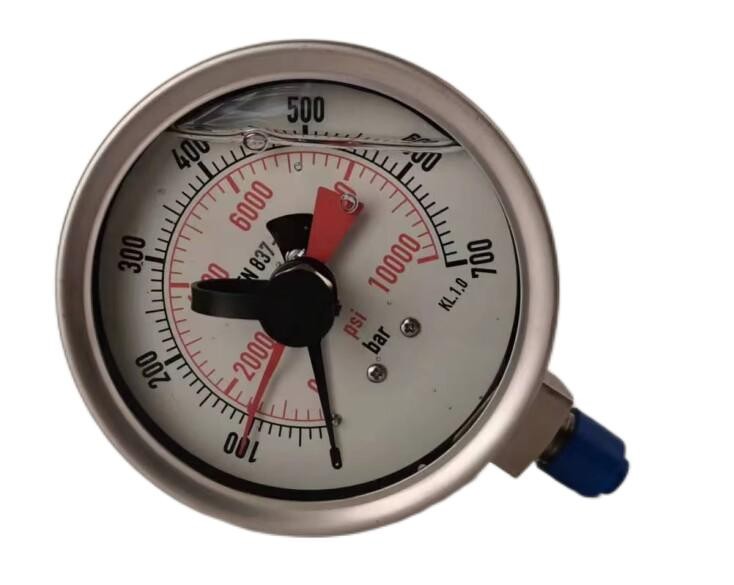
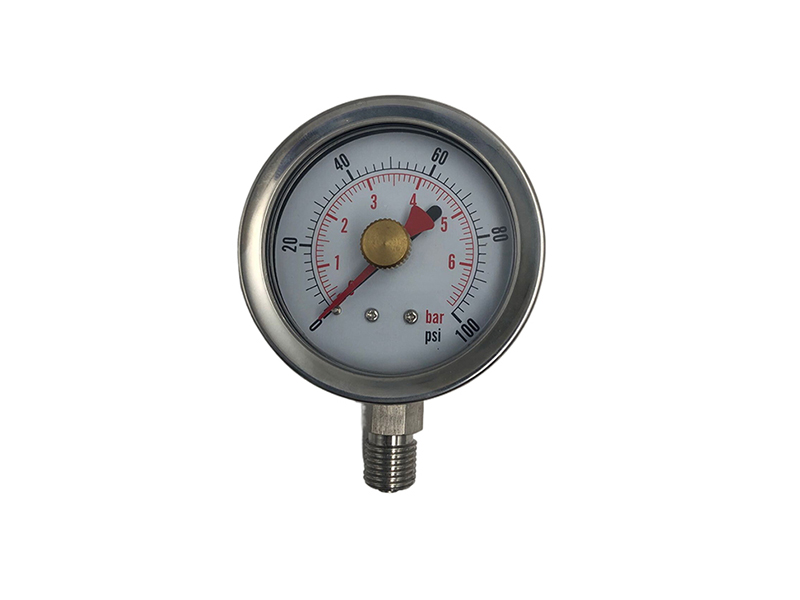
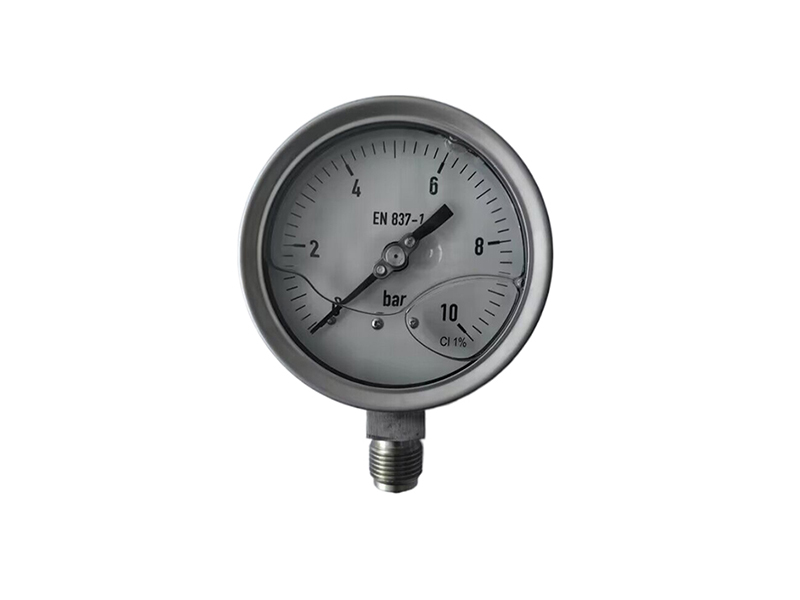
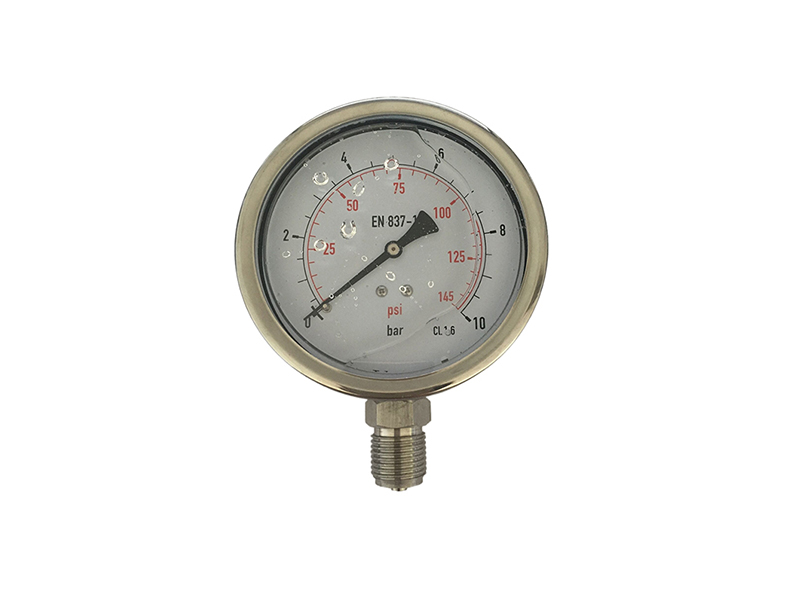
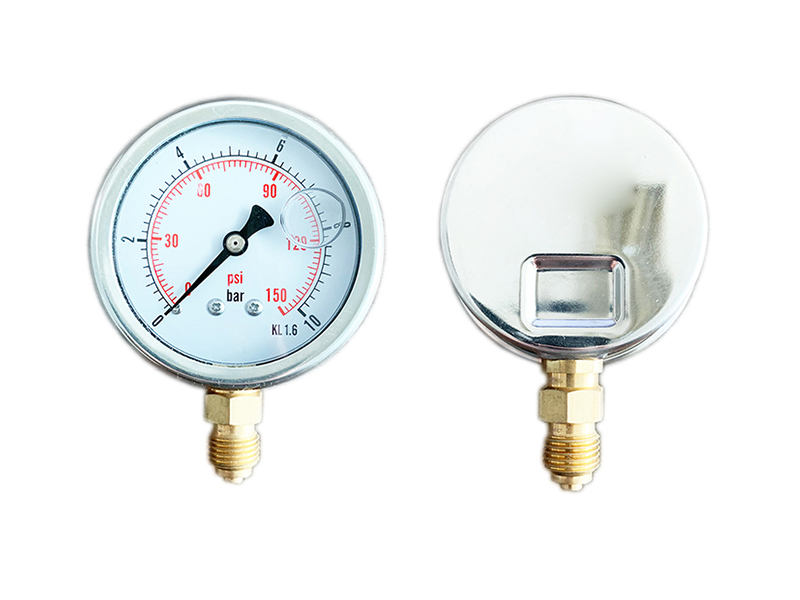
An oil filled pressure gauge is a bourdon-tube pressure measuring instrument whose case is filled with damping liquid—typically glycerin or silicone oil—to stabilize pointer movement, protect internal parts, and extend service life. Unlike a dry pressure gauge, which has air inside the case, an oil filled pressure gauge uses liquid to absorb vibration, dampen pressure pulses, lubricate gears, prevent condensation, and resist corrosion.
Core Structure
304 stainless steel case and wetted parts for corrosion resistance
Bourdon tube sensing element
Precision gear movement
Damping oil (glycerin for general use; silicone oil for extreme temperatures)
Sealed, leak-proof housing
Clear dial with fixed or peak-indicating pointer
How It Works
When fluid pressure enters the gauge, the bourdon tube flexes and drives the gear mechanism. The oil inside the case creates resistance that dampens rapid needle oscillation, so the pointer stays steady even when machinery vibrates heavily or pressure pulses violently. The oil also forms a protective barrier that blocks moisture, dust, and corrosive fumes from damaging internal components.
At Changzhou KB Instruments & Meter Co.,Ltd, our oil filled pressure gauge models undergo 72-hour pressure cycling tests to ensure zero leakage, consistent accuracy, and long-term durability under extreme operating conditions.
2. Key Advantages of Oil-Filled Pressure Gauges
2.1 Outstanding Vibration & Shock Resistance
The biggest benefit of an oil filled pressure gauge is its ability to eliminate needle flutter caused by pumps, compressors, engines, or hydraulic systems. In vibrating environments, dry gauges often produce unreadable, shaking needles—leading to incorrect readings and accelerated wear. An oil filled pressure gauge keeps the pointer stable, so operators can take accurate readings at a glance.
2.2 Longer Service Life & Less Wear
The damping oil continuously lubricates the gear train, reducing friction and mechanical fatigue. This greatly extends the life of the movement. Users typically report that oil filled pressure gauge units last 2–5 times longer than dry gauges in harsh environments. Less wear means fewer replacements, less downtime, and lower long-term costs.
2.3 Anti-Condensation & Corrosion Protection
Moisture and humidity are major enemies of dry pressure gauges, causing internal rust, fogged dials, and seized mechanisms. The sealed oil chamber in an oil filled pressure gauge prevents water vapor from entering, eliminating condensation and corrosion. This makes oil filled pressure gauge ideal for outdoor use, marine environments, wastewater facilities, and chemical plants.
2.4 Stable Performance in Extreme Temperatures
Standard glycerin-filled oil filled pressure gauge works reliably from -30°C to 120°C. For more demanding conditions, our silicone-filled oil filled pressure gauge operates from -40°C to 150°C—perfect for cold storage, desert operations, thermal processing, and offshore platforms.
2.5 High Accuracy & Clear Readability
Our oil filled pressure gauge models offer accuracy classes of ±1.6% or optional ±1.0%, meeting EN 837-1 requirements for industrial process control. The damping effect ensures readings remain precise even under pressure pulsation, so you can trust the data for safety and quality control.
2.6 Wide Compatibility & Customization
At Changzhou KB Instruments & Meter Co.,Ltd, our oil filled pressure gauge lineup supports:
Pressure ranges from vacuum up to 15,000 PSI
Dial sizes: 63mm, 100mm, 150mm
Connections: NPT, BSP, G, and custom threads
Crimped case, bayonet bezel, or peak-record pointer versions
OEM branding and custom packaging
3. Limitations of Oil-Filled Pressure Gauges
While oil filled pressure gauge products perform exceptionally well in harsh environments, they are not always the absolute best choice for every scenario.
3.1 Higher Upfront Cost
An oil filled pressure gauge costs slightly more than a dry gauge due to materials, sealing technology, and filling processes. However, the longer lifespan and reduced maintenance almost always deliver a lower total cost of ownership (TCO).
3.2 Slightly Slower Response
The damping oil creates gentle resistance, so the needle responds slightly slower than in a dry gauge. For most industrial applications, this difference is negligible. For ultra-fast dynamic pressure testing, specialized high-speed instruments may be required.
3.3 Not Ideal for Certain High-Temperature Media
Although oil filled pressure gauge handles high ambient temperatures well, extremely hot process media may require a siphon or radiator accessory to protect the gauge. Our technical team can help you configure the right setup.
3.4 Sealing Quality Matters
Low-quality oil filled pressure gauge products may leak oil over time, losing damping performance. At Changzhou KB Instruments & Meter Co.,Ltd, we use robust crimped or bayonet-sealed cases to ensure long-term leak-proof performance.
4. Oil-Filled Pressure Gauge vs. Dry Pressure Gauge: Full Comparison
| Feature | Oil Filled Pressure Gauge | Dry Pressure Gauge |
|---|---|---|
| Vibration Resistance | Excellent | Poor |
| Pointer Stability | Stable, no flutter | Shakes severely |
| Service Life | 2–5x longer | Shorter, high wear |
| Corrosion Resistance | Excellent | Poor |
| Upfront Cost | Moderate | Low |
| Best For | Harsh, vibrating, outdoor | Clean, indoor, low-vibration |
Clear Conclusion: If your equipment vibrates, pulses, operates outdoors, or is exposed to humidity or corrosion—an oil filled pressure gauge is better in every meaningful way.
5. Ideal Applications for Oil-Filled Pressure Gauges
An oil filled pressure gauge truly excels in demanding industrial environments where standard dry gauges fail quickly. Below are the most common and effective use cases.
5.1 Hydraulic & Pneumatic Systems
Hydraulic pumps, presses, lifts, and construction machinery produce intense vibration and pressure pulses. An oil filled pressure gauge provides steady, reliable readings for safe operation.
5.2 Oil & Gas Pipelines & Wellheads
Onshore and offshore oil/gas systems require rugged, corrosion-resistant instruments. Our oil filled pressure gauge withstands salt spray, vibration, and extreme temperatures while maintaining accuracy.
5.3 Chemical Processing & Refineries
Acids, solvents, humidity, and vibration demand durable instrumentation. The sealed, stainless steel oil filled pressure gauge resists corrosion and delivers stable performance.
5.4 Compressors, Pumps & Generators
Rotating equipment creates continuous vibration. An oil filled pressure gauge prevents needle damage and ensures consistent pressure monitoring.
5.5 Marine & Offshore Engineering
Saltwater, humidity, and ship vibration require heavy-duty protection. Our oil filled pressure gauge is widely used in ship hydraulic systems, deck machinery, and offshore rigs.
5.6 Mining, Metallurgy & Heavy Machinery
Dusty, vibrating, high-shock environments shorten the life of standard gauges. An oil filled pressure gauge maintains reliability in these toughest conditions.
5.7 Water Treatment & Wastewater Plants
Moisture, humidity, and occasional corrosion are constant challenges. An oil filled pressure gauge prevents internal fogging and rust for years of service.
6. How to Choose the Right Oil-Filled Pressure Gauge
To get the best performance from your oil filled pressure gauge, consider these key factors before purchasing.
6.1 Damping Oil Type
Glycerin: Best for general industrial use, cost-effective, operating range -30°C to 120°C
Silicone Oil: For extreme temperatures -40°C to 150°C, chemical stability
6.2 Pressure Range
Select a range where your normal operating pressure falls between 25%–75% of full scale for optimal accuracy and safety. Our oil filled pressure gauge covers vacuum, low, medium, and high-pressure requirements up to 15,000 PSI.
6.3 Dial Size & Mounting
63mm: Compact machinery, tight spaces
100mm: Standard industrial, most popular
150mm: Large-scale plants, long-distance viewing
Bottom mount or back mount available
6.4 Connection & Thread
NPT, BSP, G, or custom threads to fit your piping system. Our oil filled pressure gauge supports all international standards.
6.5 Accuracy Class
For most industrial systems, ±1.6% is sufficient. For critical processes, choose ±1.0% high-precision oil filled pressure gauge.
6.6 Environmental Rating
Ensure your oil filled pressure gauge has IP65 or higher protection, stainless steel case, and fully sealed construction to resist dust and water.
7. Common Misconceptions About Oil-Filled Pressure Gauges
Misconception 1: “Oil-filled gauges are too expensive.”
Fact: While initial cost is higher, the oil filled pressure gauge lasts 2–5 times longer and requires almost no maintenance. Over 2–3 years, you save money on replacements, downtime, and labor.
Misconception 2: “They leak oil easily.”
Fact: Low-quality products may leak, but professional oil filled pressure gauge units from reliable manufacturers use heavy-duty crimped or bayonet-sealed cases that remain leak-free for years.
Misconception 3: “Dry gauges are accurate enough.”
Fact: In vibrating or pulsing systems, dry gauge needles shake so violently you cannot read them accurately. An oil filled pressure gauge provides stable, trustworthy readings every time.
Misconception 4: “Oil-filled gauges are only for heavy industry.”
Fact: They work beautifully in any environment where reliability matters—including food processing, pharmaceuticals, HVAC, and water systems.
8. Why Choose Changzhou KB Instruments Oil-Filled Pressure Gauge?
At Changzhou KB Instruments & Meter Co.,Ltd, we design and produce oil filled pressure gauge products that combine performance, reliability, and value. Here’s why global customers trust us:
8.1 Premium Materials & Construction
304 stainless steel case and internal components
Fully sealed, leak-proof design
Glycerin or silicone oil filling
Compliance with EN 837-1 industrial standards
8.2 Rigorous Quality Testing
Every oil filled pressure gauge undergoes hydrostatic pressure testing, 72-hour pressure cycling test, accuracy calibration, leakage inspection, and vibration simulation testing.
8.3 Full International Certification
Our oil filled pressure gauge carries CE certification, meeting EU, US, and Asian market requirements for safety and performance.
8.4 Flexible Customization
We support custom pressure ranges, dial sizes, connections, colors, logos, and packaging—ideal for OEM projects and branded distribution.
8.5 Global Delivery & Technical Support
Changzhou KB Instruments & Meter Co.,Ltd offers reliable global shipping, complete certification documents, and professional technical support for oil filled pressure gauge selection and installation.
9. Final Conclusion: Are Oil-Filled Pressure Gauges Better?
After analyzing performance, durability, accuracy, maintenance, and total cost, we can give a clear, confident answer:
Yes—oil-filled pressure gauges are better for nearly all harsh industrial environments.
If you work with hydraulics, compressors, pumps, vibrating machinery, outdoor marine sites, chemical, oil & gas, mining, or wastewater systems, then an oil filled pressure gauge is not just better—it is the most economical and reliable long-term solution.
For clean, indoor, low-vibration applications with tight budgets, dry gauges may be acceptable. But for safety, accuracy, and longevity, oil filled pressure gauge is the superior choice.
When you choose Changzhou KB Instruments & Meter Co.,Ltd as your supplier, you get a high-performance oil filled pressure gauge built to global standards, backed by professional service and consistent quality.
I want to comment
Recent News
1.Oil Filled Pressure Gauge Pros and Cons Explained Simply
2026-03-262.Top Pressure Gauge Suppliers in the USA for 2026
2026-04-283.How to Choose the Right Pressure Gauge Supplier for Your Needs
2026-03-104.Top 10 Oil Filled Pressure Gauge Suppliers and Manufacturers in China 2026
2026-01-235.Are Liquid-Filled Pressure Gauges Better?
2026-01-146.Understanding Marine Clocks and Barometers and Their Importance
2026-01-06




View More(Total0)Comment lists