



Medical Pressure Gauge Applications in Modern Healthcare
 Aug 28, 2026|
 View:380
Have you ever thought about the technology behind a simple blood pressure reading? That small dial or digital screen depends on a medical pressure gauge to give important data.
In healthcare, you rely on these tools to check vital signs and manage complex treatments. Picking the right gauge means paying attention to specs, materials, and brand trust. Correct setup and care keep it accurate and keep patients safe. This article looks at these three key points to help you choose wisely.
Key Takeaways
Medical pressure gauges help keep patients safe by giving correct readings for vital signs and important care equipment.
Pick a gauge that is very accurate (Class 1.6 or better) and has the right pressure range for your exact medical use.
Choose gauges made from strong, easy-to-clean materials like brass and polycarbonate, and trust manufacturers that have proven they are reliable.
Regular calibration and upkeep are key to stop drift and keep steady, correct results.
Installing the gauge correctly and following safety rules are key to keeping it working well and keeping patients safe.
Medical Pressure Gauge Uses in Patient Care
Monitoring Vital Signs and Respiratory Support
You use the medical pressure gauge every day to help patients. One common use is blood pressure checks with sphygmomanometers. These tools measure how hard blood pushes against artery walls. For accurate blood pressure readings, the device must follow strict rules. The table below shows the key requirements.
Standard | Accuracy Requirement |
|---|---|
BHS (Grade B) | At least 50% of readings within 5 mm Hg AND 75% within 10 mm Hg |
AAMI | Average difference ≤ 5 mm Hg AND standard deviation < 8 mm Hg |
These rules come from tests that take three readings in 85 people of different ages and blood pressures. Accurate blood pressure checks directly affect patient care and treatment choices.
Patients should use only monitors proven accurate by standard international testing like AAMI and BHS. Updated lists of proven monitors are on the Dabl Educational website and the British Hypertension Society website.
Ventilators and respirators also need the pressure sensor to work safely. These critical care devices give breaths to people who cannot breathe alone. Patient-ventilator dyssynchrony happens in about one-third of ventilated patients. The cause is sensor noise that forces system-level oversampling, adding delay to the feedback loop. A pressure sensor with 24-bit resolution, under 1 kHz update rate, and ultra-low noise floor allows direct high-speed detection without oversampling. This improves safety by lowering the risk of lung injury. These critical care devices need exact pressure readings to work right.
Trigger sensitivity adjustment: Pressure sensors set the pressure level needed to start a breath. This stops both under-help and over-help.
Patient effort detection: Sensors detect how hard a patient tries to breathe and adjust tidal volume or pressure support. They reduce support when no effort is present.
Airway resistance monitoring: Sensors detect resistance changes and adjust pressure support or flow rate to fix dyssynchrony.
Oxygen therapy also needs highly accurate flow sensors. These sensors control airflow and check filter cleanliness to keep air quality good. Stainless steel high-pressure transducers monitor O2 tank pressure. Changes in tank pressure directly affect the oxygen concentration delivered. Flow sensing makes sure the person gets the right O2 volume.
For sleep apnea treatment, critical care devices like CPAP machines use positive pressure masks. About 13% of men and 6% of women have moderate to severe obstructive sleep apnea. CPAP works like a pneumatic splint to keep the airway open during sleep. Mask types include nasal masks, oronasal masks, nasal pillow masks, hybrid oral masks, and oral-only masks. Proper mask fit greatly affects treatment adherence. All these critical care devices depend on the medical pressure gauge for accurate readings.
Managing Renal, Cardiac, and Neurological Therapies
Beyond checking vital signs, the medical pressure gauge plays a key role in complex treatments. In dialysis machines, monitoring and managing pressures is vital for fluid removal. These critical care devices must keep exact pressure to remove waste from blood without causing harm.
During angioplasty, blood pressure monitoring inside the balloon prevents problems. Doctors use a pressure catheter, pressure wire, or guide extension catheter for real-time evaluation of pressure gradients. The key metric is the distal-to-proximal mean pulmonary artery pressure (mPAP) ratio. The target threshold is a ratio above 0.80 when baseline central mPAP exceeds 35 mm Hg. This lowers the risk of reperfusion lung injury. Doctors should not try to normalize the ratio to 1.0 or raise distal mPAP above 35 mm Hg.
Aspect | Detail |
|---|---|
Monitoring Tools | Pressure catheter, pressure wire, or guide extension catheter for real-time evaluation of pressure gradients |
Pressure Metric | Distal-to-proximal mean pulmonary artery pressure (mPAP) ratio |
Target Threshold | Ratio above 0.80 when baseline central mPAP exceeds 35 mm Hg |
Complication Risks | Do not attempt to normalize ratio to 1.0; avoid raising distal mPAP above 35 mm Hg |
For neurological care, intracranial pressure (ICP) monitoring is critical. ICP cannot be guessed from clinical features or CT findings. It must be measured directly. Intraventricular catheters and microtransducer systems are the most common methods. Clinical evidence supports ICP monitoring to find mass lesions early, guide treatments, and assess prognosis. This monitoring is vital for patient safety.
ICP threshold: Act when ICP goes above 22 mmHg for 5 minutes or longer without stimulation.
Monitoring indication: Recommended for people with GCS 8 or less and abnormal head CT, or hypotension.
CPP goal: Keep cerebral perfusion pressure above 60 mmHg.
Tier 1 interventions: Repeat neurologic exam, optimize sedation, drain CSF via EVD, keep pCO2 at 35-38 mmHg, give hypertonic saline or mannitol boluses.
Tier 2 interventions: Consider repeat CT brain, notify neurosurgery, mild hypocapnia, and MAP challenge.
Tier 3 interventions: Induced hypothermia, consider decompressive craniectomy, and barbiturate coma trial.
Pulmonary artery pressure assessment also uses pressure sensors to guide treatment for people with heart failure. These medical procedures need real-time data to make quick clinical decisions. In all these uses, accuracy is non-negotiable. Monitoring systems use these gauges to track physiological parameters continuously. From ICU monitoring to routine healthcare settings, these critical care devices keep everyone safe. Proper blood pressure monitoring in all these settings improves outcomes.
Selecting Medical Pressure Sensors for Clinical Accuracy
Key Specifications: Accuracy, Range, and Compatibility
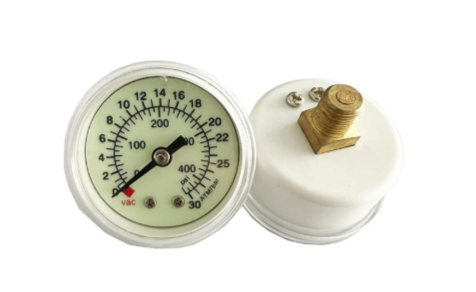
When picking a medical pressure sensor for your facility, three specs matter most: accuracy, pressure range, and connection type. These factors directly affect patient safety and treatment results.
Accuracy shows how close the reading is to the real value. Medical pressure gauges come in different accuracy classes. You can see the common standards below.
Accuracy Class | Maximum Error (% of full scale) |
|---|---|
Class 1.0 | 1.0% |
Class 1.6 | 1.6% |
Class 2.5 | 2.5% |
For most clinical uses, you need Class 1.6 or better. This means the gauge shows a reading within ±1.6% of the full scale value. For example, a gauge with a 100 psi range and Class 1.6 accuracy gives readings within 1.6 psi of the true pressure. This level of precision is critical for treatments like ventilator support and dialysis.
The pressure range you need depends on the application. For many medical devices, a range up to 400 psi works well. You must select a range that covers your expected operating pressures. A gauge with too wide a range loses resolution. A gauge with too narrow a range risks damage.
Connection type also matters. Medical pressure sensors often use M10x0.75 or 1/8PT threads. These connection types fit standard medical equipment. You should verify compatibility before purchase. The gauge must also operate in ambient temperatures from 5 to 60°C. This range covers most clinical environments.
International standards guide you in making the right choice. Look for ISO 9001 certification for quality management. ISO 13485 is the specific standard for medical devices. CE marking shows conformity with European regulations. For North America, check for UL, FM, or CSA certifications. These standards ensure the device meets safety and performance requirements.
Material, Design, and Brand Reliability
The materials used in a pressure sensor affect its durability and cleanliness. Medical environments are harsh. Equipment faces regular cleaning with strong chemicals. Physical impacts happen daily. You need a gauge that withstands these conditions.
Brass connections offer good durability for general medical use. They resist corrosion and provide reliable sealing. The lens should be made of PC (polycarbonate) material. PC lenses resist impact and stay clear over time. The case can be white or black plastic. Plastic cases are lightweight, clean, and cost-effective. For more demanding environments, stainless steel cases provide extra protection against corrosion.
Durability matters because medical environments can be harsh. Exposure to cleaning solutions and physical impacts tests every component. A gauge made of high-quality materials ensures longevity and resistance to wear.
When you evaluate brands, look for proven reliability. Changzhou KB Instruments & Meter Co., Ltd. has over 15 years of expertise in manufacturing pressure gauges. The company holds CE certification for its products. It offers a 24-month warranty on every gauge. This commitment gives you confidence in the product's quality.
What sets KB apart is its zero-leakage guarantee. Every gauge undergoes 100% pressure testing before shipment. This testing catches any defects early. The result is a medical pressure sensor you can trust in critical situations. From blood pressure monitoring to intracranial pressure assessment, reliability is non-negotiable.
Choosing the right manufacturer means choosing a partner in patient safety. You want a company that understands the stakes.KB's track record spans over 60 countries. Their medical pressure gauges deliver the measurement accuracy and range you need for effective care. You can depend on these tools for critical readings every day.
Ensuring Patient Care Reliability with Proper Maintenance
Installation and Calibration Best Practices
Good installation starts with getting ready. Look over the gauge for cracks or harm. Clean every part well. This step is very important for safety. Medical rules require cleaning without oil.
Next, make the connection tight. Put PTFE tape on the threads to stop leaks. Check that the pointer sits at zero. Fix it if needed. Close the bleed valve. Open the isolation valve slowly. This stops pressure hammer. Let the system settle. Write down the reading.
First-time calibration must follow medical rules. This key process follows FDA guidelines. Calibrate equipment on a regular basis. Keep records of every calibration. Set clear limits for accuracy. Staff who calibrate must get proper training. Calibration standards must link to national standards. The process follows a clear order. Check how the device is working now. Set up the device with calibrated reference tools. Adjust the measurements. Test the device. Make detailed records. The pressure sensor must pass these tests. Put results in an asset management system.
Routine Maintenance and Replacement Schedules
The Changzhou KB Instruments & Meter Co.,Ltd medical pressure gauge is built to last and work well. But you still need regular checks. The pressure sensor inside the gauge can drift over time. Like all pressure sensors, it reacts to the environment. This drift is often unseen and gets worse slowly. Small errors build up until they pass safe limits. This directly affects patient care.
Drift causes serious problems. Infusion pumps with drift give medication at slightly wrong rates. Monitors with creeping errors produce incorrect lab results. Ventilator pressure sensor drift can lead to poor breathing support. This may cause hypoxia or other dangerous issues.
In healthcare settings, the accuracy of pressure gauges can impact the delivery of medical gases used in anesthesia or patient care. Inaccurate readings could result in improper dosages, directly affecting patient health.
Watch for signs that mean you need to replace the gauge.
Warning Sign | Supporting Detail |
|---|---|
Inaccurate readings | Readings that keep changing after recalibration mean internal failure. |
Sticking or pegged needle | A needle that sticks means internal damage. |
Cracks, leaks, or fogging | Visible damage means the seal has failed. |
Make a plan for regular checks. Look at the gauge every three to six months. Recalibrate once a year. Replace the gauge if you see any warning signs. The KB gauge comes with a 24-month warranty. But you still need to do regular checks. Patient safety depends on it. Modern pressure sensors work well, but maintenance is still key.
From monitoring vital signs to managing complex therapies, you have seen how the medical pressure gauge supports critical care. Selecting the right equipment and maintaining it properly is critical for safety. A reliable manufacturer like Changzhou KB Instruments & Meter Co.,Ltd delivers the accuracy you need. This commitment is critical for achieving better patient outcomes. Smart pressure sensors now provide real-time data for remote monitoring and telehealth. Each pressure sensor enhances comfort in healthcare settings. Personalized health data analytics allow tailored treatment plans. This technology is critical for modern care. These innovations improve patient outcomes across medical procedures. The future of patient care depends on precision.
FAQ
How often should I recalibrate a medical pressure gauge?
Recalibrate your medical pressure gauge at least once a year. Places that use it a lot may need to check it more often. Regular calibration stops drift that could hurt patient safety. Always follow your facility's rules and write down each calibration.
What accuracy class do I need for clinical applications?
For most medical uses, pick a Class 1.6 gauge or better. This means the reading is within ±1.6% of the full scale value. For example, a 100 psi gauge shows readings within 1.6 psi of the real pressure. This level of accuracy helps with important treatment choices.
Can I use an industrial pressure gauge in medical settings?
No. Industrial gauges do not have the safe materials and strict rules needed for patient care. Medical pressure gauges get oil-free cleaning and meet specific accuracy needs. Using non-medical equipment puts patients at risk and breaks safety rules.
How do I know when to replace my medical pressure gauge?
Look for three warning signs. First, readings that change after recalibration mean the inside is broken. Second, a needle that sticks or stays in one place means damage. Third, cracks, leaks, or fogging mean the seal has failed. Replace the gauge right away if you see any of these.
What makes Changzhou KB Instruments & Meter Co.,Ltd medical pressure gauges reliable?
Changzhou KB Instruments & Meter Co.,Ltd tests every gauge with 100% pressure testing before shipping. The company promises no leaks and gives a 24-month warranty. With over 15 years of making gauges, KB gives steady accuracy that healthcare workers trust for important monitoring.




View More(Total0)Comment lists