



A Closer Look at the Four Main Types of Pressure Gauges
 Aug 18, 2025|
 View:2443
In industrial processes, pressure measurement is not merely a technical requirement but a cornerstone of safety, efficiency, and quality control. From the high-pressure environments of oil rigs to the precise low-pressure monitoring in pharmaceutical cleanrooms, the choice of pressure gauge directly impacts operational reliability. Among the most widely used instruments are Bourdon tube pressure gauges, diaphragm pressure gauges, capsule pressure gauges, and digital pressure gauges—each engineered to address specific challenges in pressure measurement. This article delves into the technical intricacies of these four types, exploring their design principles, performance characteristics, applications, and maintenance requirements to provide a definitive guide for industrial professionals.
1. Bourdon Tube Pressure Gauges: The Workhorse of High-Pressure Applications
Design and Working Principle
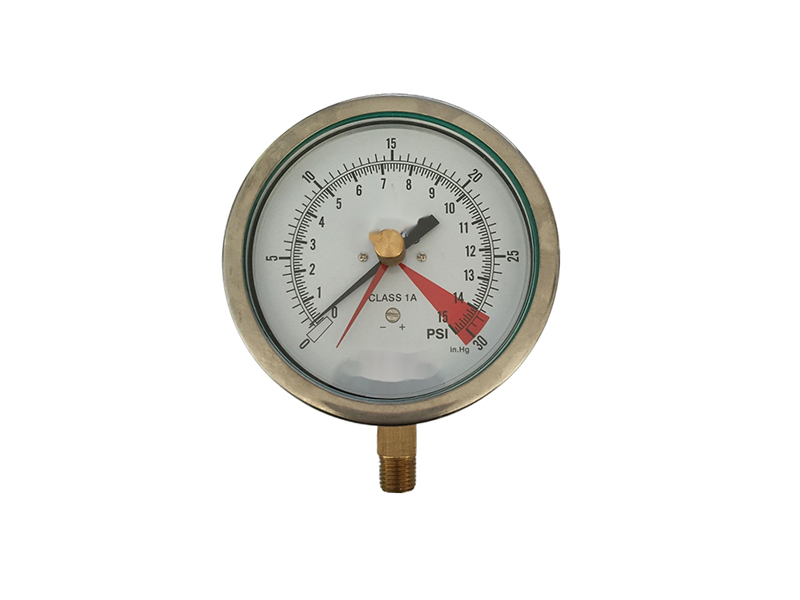
Bourdon tube gauges, invented in 1849 by Eugène Bourdon, remain the most ubiquitous pressure measurement tools in heavy industry. Their operation relies on the elastic deformation of a curved, hollow tube—typically C-shaped, spiral, or helical—made from materials like brass, 316 stainless steel, or Monel. When pressure is applied to the tube’s interior, the curved structure tends to straighten due to internal pressure, a phenomenon driven by the unequal stress distribution across the tube’s inner and outer walls (inner walls experience greater pressure, causing outward expansion). This linear motion is transferred to a gear-and-lever mechanism, which converts it into rotational movement, turning a pointer on a calibrated scale to display pressure readings.

Technical Specifications
Pressure Range: Designed for high-pressure applications, with standard ranges from 0–100 psi (0–7 bar) to 0–100,000 psi (0–7,000 bar), making them suitable for extreme industrial environments.
Accuracy: Industrial-grade models offer accuracy of ±1% to ±2.5% of full scale; precision versions (used in calibration) achieve ±0.1% to ±0.5%.
Temperature Limits: -40°F to 140°F (-40°C to 60°C) for standard models; high-temperature variants (with heat sinks) extend to 300°F (150°C).
Material Compatibility: Brass tubes are cost-effective for non-corrosive media (e.g., water, air), while stainless steel or Monel tubes resist corrosion from chemicals, seawater, or acidic fluids.
Advantages and Limitations
Advantages:
Exceptional durability, withstanding vibration, shock, and overpressure (up to 130% of full scale in rugged models).
Versatility across gaseous and liquid media (excluding highly viscous or crystallizing substances that may clog the tube).
No external power required, ensuring reliability in remote or hazardous locations.
Limitations:
Reduced accuracy at pressures below 10% of full scale, making them unsuitable for low-pressure applications.
Susceptible to fatigue failure in cyclic pressure environments (e.g., reciprocating pumps) without damping mechanisms.
Key Applications of Bourdon Tube Pressure Gauges
Bourdon tube gauges dominate industries requiring robust high-pressure monitoring:
Oil and Gas: Wellhead pressure monitoring, pipeline pressure control, and hydraulic system testing.
Mining: Pressure measurement in drilling equipment, hydraulic lifts, and compressed air systems.
Manufacturing: Boiler pressure monitoring, steam systems, and heavy machinery hydraulics.
2. Diaphragm Pressure Gauges: Specialists in Corrosive and Low-Pressure Environments
Design and Working Principle
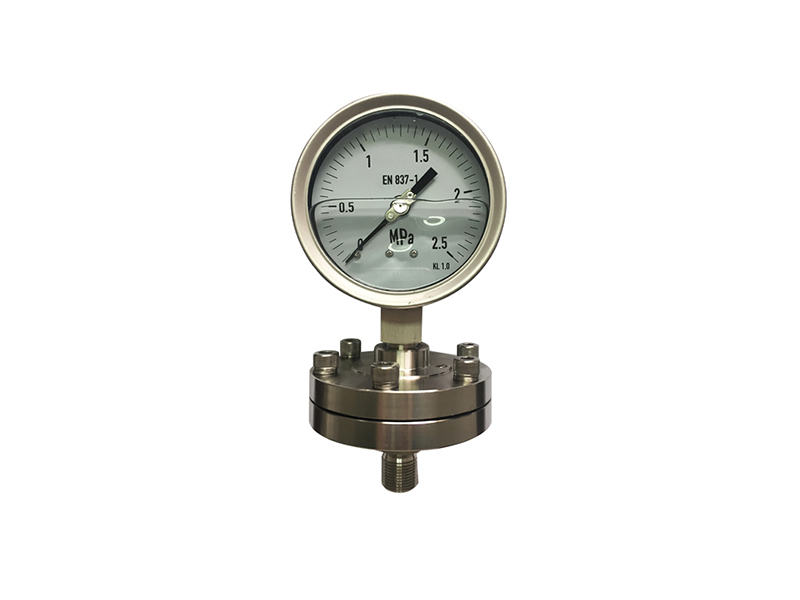
Diaphragm pressure gauges utilize a flexible, circular membrane (diaphragm) as the primary sensing element. The diaphragm—made from materials like stainless steel, Hastelloy, or PTFE-coated metals—is clamped between two flanges, with one side exposed to the process pressure and the other connected to a reference chamber (atmospheric for gauge pressure, vacuum for absolute pressure). When pressure is applied, the diaphragm deflects (expands or contracts), and this movement is transmitted via a linkage system to a pointer, similar to Bourdon tube gauges but with a focus on low-pressure sensitivity.

A critical design feature is the diaphragm’s ability to isolate the gauge’s internal mechanism from the process media, making it ideal for corrosive, viscous, or particulate-laden fluids. For extreme corrosion resistance, diaphragms may be lined with PTFE or made from inert materials like tantalum.
Technical Specifications
Pressure Range: Optimized for low pressures, typically 0–15 psi (0–1 bar) down to 0–0.5 psi (0–0.03 bar); some models handle vacuum (down to -14.7 psi).
Accuracy: ±0.5% to ±2% of full scale, with precision versions achieving ±0.25% for critical applications.
Temperature Compatibility: -30°F to 250°F (-34°C to 121°C) for standard diaphragms; high-temperature models (with metal diaphragms) reach 400°F (204°C).
Isolation Capabilities: Hermetic sealing prevents media contact with internal components, suitable for toxic or high-purity fluids.
Advantages and Limitations
Advantages:
Superior corrosion resistance, making them ideal for aggressive media (e.g., acids, alkalis, and chlorides).
High sensitivity at low pressures, outperforming Bourdon tube gauges in ranges below 15 psi.
Compatibility with viscous fluids (e.g., adhesives, slurries) and crystallizing media (e.g., brines) that would clog Bourdon tubes.
Limitations:
Lower maximum pressure capacity (typically<1,000 psi) compared to Bourdon tube gauges.
Diaphragm fatigue in high-cycle applications, requiring more frequent calibration.
Key Applications Of Diaphragm gauges
Diaphragm gauges excel in industries with challenging media or low-pressure requirements:
Chemical Processing: Monitoring pressure in reactors, acid storage tanks, and chlorination systems.
Food and Beverage: Sanitary applications (e.g., dairy processing, brewing) where PTFE linings prevent contamination and enable CIP (Clean-in-Place) protocols.
Pharmaceuticals: Pressure control in sterile filtration systems and bioreactors, where corrosion resistance and purity are critical.
3. Capsule Pressure Gauges: Precision Tools for Low-Pressure Gas Measurement
Design and Working Principle
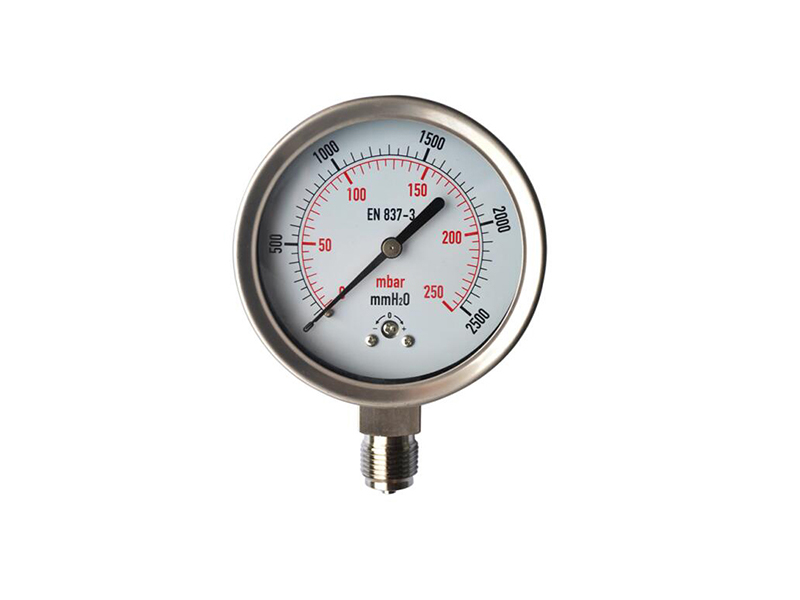
Capsule pressure gauges are specialized for ultra-low-pressure gas applications, utilizing a "capsule" assembly—two corrugated diaphragms welded together at their outer edges to form a sealed, hollow chamber. When pressure is applied to the capsule’s exterior, the corrugations flatten, causing the capsule to expand axially. This expansion is amplified by a linkage system, driving a pointer to indicate pressure.
The corrugated design enhances sensitivity: the diaphragm’s undulations act like springs, magnifying small pressure-induced movements. Unlike diaphragm gauges, which isolate media from internal components, capsule gauges are directly exposed to the gas, making them unsuitable for liquids or corrosive vapors.

Technical Specifications
Pressure Range: Specialized for very low pressures, typically 0–2 psi (0–0.14 bar) to 0–30 psi (0–2 bar); some models measure differential pressure (e.g., 0–10 inches of water).
Accuracy: ±0.5% to ±1% of full scale, among the highest for low-pressure gas measurement.
Media Compatibility: Limited to clean, non-corrosive gases (e.g., air, nitrogen, natural gas) to avoid capsule degradation.
Size: Compact design (2–4 inches in diameter), suitable for confined spaces like HVAC ductwork or laboratory benches.
Advantages and Limitations
Advantages:
Unmatched precision in low-pressure gas applications, detecting changes as small as 0.01 psi.
Minimal pressure drop across the capsule, ensuring accurate measurement in low-flow systems.
Simple construction with few moving parts, reducing maintenance needs.
Limitations:
Incompatibility with liquids, viscous media, or corrosive gases (which damage the capsule).
Fragility compared to Bourdon tube or diaphragm gauges, requiring protection from mechanical shock.
Key Applications Of Capsule pressure gauges
Capsule gauges are indispensable in industries requiring fine control over gas pressure:
HVAC and Building Automation: Measuring static pressure in air ducts, ensuring balanced airflow in commercial buildings.
Environmental Monitoring: Tracking pressure in air sampling systems, stack emissions, and cleanroom ventilation.
Laboratories: Calibrating low-pressure equipment, monitoring gas flow in chromatography, and controlling inert gas blankets.
4. Digital Pressure Gauges: The Future of Precision and Connectivity
Design and Working Principle
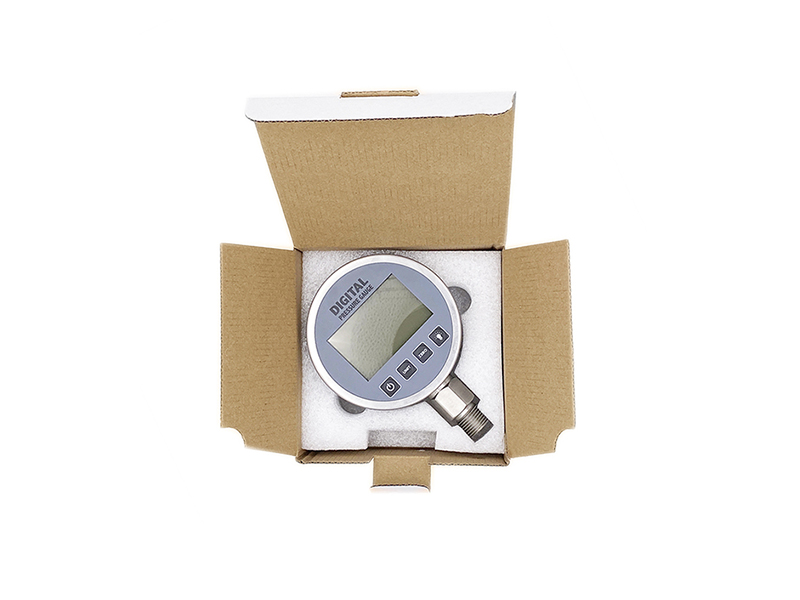
Digital pressure gauges replace mechanical components with electronic sensors and microprocessors, representing a leap in measurement technology. They use piezoresistive, capacitive, or piezoelectric sensors to convert pressure into an electrical signal, which is processed and displayed digitally (LCD or OLED). Piezoresistive sensors—most common in industrial models—consist of a silicon diaphragm with embedded resistors; pressure-induced deformation changes resistance, which is measured and converted to a pressure reading.
Advanced models integrate data logging, wireless connectivity (Bluetooth, Wi-Fi), and compatibility with industrial protocols (Modbus, OPC UA), enabling seamless integration into smart factory systems.

Technical Specifications
Pressure Range: Versatile, covering vacuum (-14.7 psi) to high pressure (0–10,000 psi), with select models reaching 0–100,000 psi.
Accuracy: Exceptional, with precision models achieving ±0.025% to ±0.1% of full scale—far exceeding mechanical gauges.
Resolution: Up to 0.001 psi, allowing detection of minute pressure fluctuations.
Connectivity: USB, Ethernet, or wireless (LoRaWAN, NB-IoT) for real-time data transmission; some include cloud integration for remote monitoring.
Advantages and Limitations
Advantages:
Unrivaled precision and resolution, critical for research, calibration, and high-tech manufacturing.
Data logging and automation capabilities, storing thousands of readings for trend analysis or compliance reporting.
Reduced maintenance: no moving parts minimize wear, and digital calibration (via software) simplifies upkeep.
Limitations:
Dependence on power (battery or AC), risking failure in power-outage scenarios (mitigated by backup batteries in rugged models).
Higher upfront cost compared to mechanical gauges, though offset by lower long-term maintenance expenses.
Susceptibility to electromagnetic interference (EMI) in heavy-industry environments, requiring shielding.
Key Applications of Digital pressure gauges
Digital gauges are transforming industries demanding precision and data-driven decision-making:
Aerospace and Defense: Calibrating avionics, monitoring fuel system pressure, and testing hydraulic components.
Pharmaceuticals: Validating pressure in lyophilizers (freeze-dryers) and ensuring sterile filtration systems meet regulatory standards.
Research and Development: Laboratory experiments requiring sub-psi accuracy, such as material science or fluid dynamics studies.
Choosing the Right Pressure Gauge: A Decision Framework
Selecting the optimal pressure gauge requires balancing application demands with instrument capabilities. Key factors include:
Pressure Range: Bourdon tube for high pressure (>100 psi); capsule or diaphragm for low pressure (<30 psi).
Media Type: Diaphragm gauges for corrosive/viscous media; capsule for clean gases; Bourdon tube for non-corrosive liquids/gases.
Accuracy Needs: Digital gauges for ±0.1% precision; mechanical gauges for ±1% to ±2.5% in industrial settings.
Environment: Explosive environments favor mechanical gauges (no sparks); smart factories prioritize digital gauges for connectivity.
Maintenance: Digital gauges reduce upkeep; mechanical gauges suit remote locations with limited service access.
Conclusion: Evolving with Industrial Needs
Bourdon tube, diaphragm, capsule, and digital pressure gauges each represent a unique solution to pressure measurement challenges, from the brute strength of Bourdon tubes in oil fields to the pinpoint precision of digital gauges in pharmaceutical labs. As industries embrace automation and Industry 4.0, digital gauges are increasingly integrated with mechanical types—combining real-time data with the reliability of analog backups.
Understanding the technical nuances of each gauge type ensures not only accurate measurement but also enhanced safety, reduced downtime, and optimized processes. In the end, the "right" gauge is not just a tool but a critical component in the industrial ecosystem, where precision and reliability directly impact productivity and profitability.
I want to comment
Recent News
1.Medical pressure gauge's mandatory verification scope and verification cycle
2020-08-092.How to choose and install a suitable drag pointer pressure gauge
2020-08-113.How much do you know about refrigerant pressure gauges?
2020-08-024.Installation method of commercial pressure gauge
2020-12-225.What is the general price of Mini Pressure Gauge
2020-08-136.How to check Process Pressure Gauge
2020-08-117.What are the types of Refrigerant pressure gauge
2021-03-238.Why do duplex pressure gauges have buffer tubes
2020-08-24




View More(Total0)Comment lists