



How Does a Digital Pressure Gauge Work?
 Sep 08, 2025|
 View:2075
If you’ve ever wondered how a digital pressure gauge works, you’re not alone. These handy devices pop up everywhere—from checking tire pressure to monitoring complex industrial systems. They might look simple on the outside, but inside, they’re a neat blend of engineering and technology.
In this article, we’re going to break down the mystery. We’ll explore what a digital pressure gauge is, how it works, why it’s better than traditional analog gauges, and where you’ll most likely use one. Ready? Let’s dive right in.
What Is a Digital Pressure Gauge?
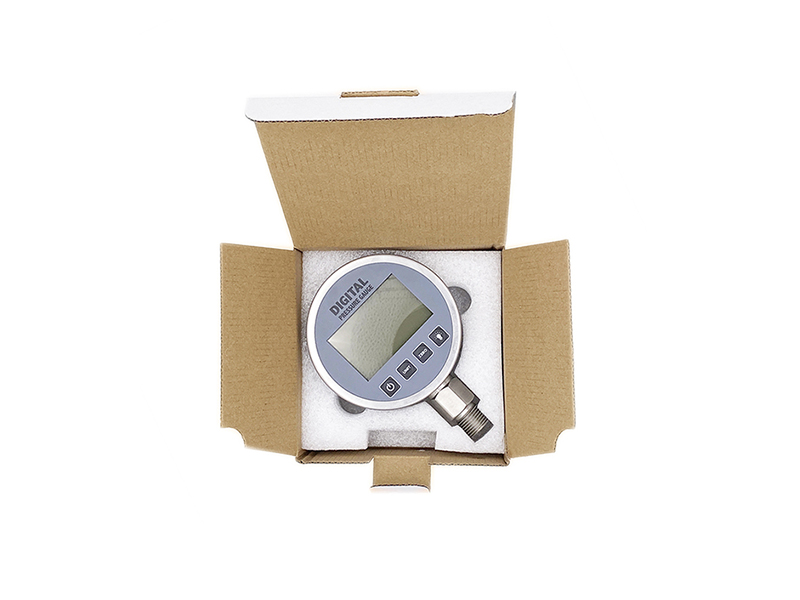
At its core, a digital pressure gauge is a device that measures pressure and displays the reading on a digital screen. Unlike old-school analog pressure gauges that rely on needles and dials, digital versions give you precise, easy-to-read numbers—often down to a fraction of a unit.
Think of it like upgrading from a flip phone to a smartphone. Both get the job done, but the digital version adds accuracy, convenience, and modern features.

The Basics: How Pressure Gets Measured
So, how does this all work? Pressure is essentially the force applied by a fluid (like gas or liquid) against a surface. The digital pressure gauge’s job is to sense that force and turn it into an electrical signal, which can then be displayed as a number on the screen.
Here’s the simplified process:
Pressure enters the gauge through a port or fitting.
A sensor inside detects the force of that pressure.
The sensor converts the force into an electrical signal.
Electronics process the signal and translate it into meaningful numbers.
The display shows the pressure reading in the desired unit (psi, bar, kPa, etc.).
Sounds straightforward, right? But the magic lies in the details—especially in the type of sensor used.
Key Component: The Pressure Sensor
The heart of any digital pressure gauge is its sensor. This is the part that actually “feels” the pressure. There are a few types, but the most common is the strain gauge sensor.
Strain Gauge Principle: When pressure is applied, it causes tiny deformations (stretching or compressing) in the material. These deformations change the electrical resistance, which can then be measured.
Piezoelectric Sensors: Some digital pressure gauges use materials that generate a small electric charge when pressure is applied.
Capacitive Sensors: Others work by detecting changes in capacitance (electrical storage ability) when pressure alters the distance between two plates.
No matter which sensor is used, the concept is the same: pressure gets turned into an electrical signal.
The Role of the Microprocessor
Now, once the sensor has done its job, a microprocessor takes over. This little computer brain processes the raw signal, corrects for errors, and converts it into a readable format.
Here’s where the beauty of digital comes in:
The microprocessor can auto-calibrate readings.
It can filter out noise from vibrations or temperature changes.
It ensures that the display shows numbers you can trust, not just a guess.
Digital Display: Why It’s a Game-Changer
Gone are the days of squinting at a tiny needle and trying to guess if it’s pointing to 2.3 or 2.4. A digital pressure gauge puts the number right in front of you—clear, precise, and often with multiple units available.
For example:
You can switch between psi and bar with the press of a button.
Some models even show min/max values or track trends over time.
Backlit screens make it easy to read, even in low-light conditions.
It’s like comparing a wristwatch with hands versus a digital smartwatch—the difference in convenience is night and day.
Power Source: Batteries or Beyond
You might be wondering, “How does the display get its power?”
Most digital pressure gauges run on long-life batteries. Some industrial-grade ones can even connect to external power sources or use solar assistance. Since modern electronics are energy-efficient, a gauge can last months or even years before needing a battery change.
Calibration: Keeping It Accurate
Accuracy is everything. That’s why digital pressure gauges often come with calibration features. Calibration ensures the readings remain reliable over time, even if environmental factors like temperature shifts try to mess things up.
High-end gauges allow automatic calibration.
Others can be calibrated manually with a standard reference.
Think of calibration like getting your eyes checked—it keeps things sharp and on point.
Advantages of Digital Pressure Gauges
So, why go digital instead of sticking with analog? Let’s list the perks:
Higher Accuracy – Many digital gauges are accurate within ±0.1% of the reading.
Easy to Read – Large numbers, no guesswork.
Multiple Units – Switch between psi, bar, kPa, etc. instantly.
Data Logging – Some models record and store readings for analysis.
Durability – Resistant to vibration and shock compared to analog dials.
User-Friendly – Backlighting, alarms, and auto shut-off make them hassle-free.
Where Are Digital Pressure Gauges Used?
The versatility of a digital pressure gauge is incredible. You’ll find them in:
Automotive: Checking tire pressure and engine diagnostics.
Manufacturing: Monitoring pressure in hydraulic and pneumatic systems.
Oil & Gas: Keeping pipelines and tanks within safe limits.
Medical: Used in devices like ventilators and anesthesia machines.
HVAC: Ensuring heating and cooling systems run smoothly.
Basically, anywhere pressure matters, digital gauges step in.
Industrial vs. Consumer Digital Pressure Gauges
Not all digital pressure gauges are created equal. Let’s compare:
Consumer Models
Lightweight, portable, and affordable.
Great for home, car, or small workshop use.
Typically measure up to moderate pressures.
Industrial Models
Built to withstand extreme conditions.
Offer advanced features like wireless data transfer.
Can handle very high or very low pressures.
It’s like comparing a kitchen knife to a professional chef’s blade—same purpose, different league.
Digital Pressure Gauge vs. Analog Gauge
Still on the fence about whether digital is worth it? Here’s a quick showdown:
| Feature | Digital Pressure Gauge | Analog Pressure Gauge |
|---|---|---|
| Accuracy | Very high | Moderate |
| Ease of Reading | Instant & clear | Can be tricky |
| Durability | Shock/vibration resistant | More fragile |
| Calibration | Easy, often automatic | Manual, less precise |
| Data Logging | Available | Not possible |
| Cost | Slightly higher | Cheaper |
Bottom line? Digital wins in performance, but analog still has a place if you need something super basic and budget-friendly.
Limitations of Digital Pressure Gauges
Okay, digital isn’t perfect. A few downsides exist:
Cost: Usually higher upfront.
Battery Dependence: No battery = no reading.
Complexity: Some models have a learning curve.
But honestly, the benefits far outweigh these drawbacks for most users.
How to Choose the Right Digital Pressure Gauge
Shopping for one? Here are some factors to consider:
Pressure Range – Make sure the gauge covers your needs.
Accuracy Requirements – For critical applications, go for high precision.
Display Features – Backlight, multiple units, data logging.
Durability – Look for rugged casings if using in harsh environments.
Power Source – Check battery life or external power options.
Maintenance Tips for Digital Pressure Gauges
To keep your gauge working like new:
Calibrate regularly.
Store it in a dry, dust-free place.
Replace batteries before they fully die.
Avoid overloading it beyond the rated pressure.
Think of it as giving your gauge the TLC it deserves—just like you’d care for a car or smartphone.
Future of Digital Pressure Gauges
Technology keeps evolving. The future likely holds:
Wireless connectivity for remote monitoring.
Smartphone apps that sync with your gauge.
AI integration for predictive maintenance.
Pretty soon, your digital pressure gauge could be as smart as your smartwatch.
Final Thoughts
So, how does a digital pressure gauge work? In short:
Pressure gets sensed by a sensor.
A microprocessor processes the signal.
The result is shown on a digital screen.
Simple in concept, yet powerful in practice.
Whether you’re an engineer, a car enthusiast, or just someone curious about technology, understanding digital pressure gauges gives you a new appreciation for how everyday tools quietly keep the world running.
I want to comment
Recent News
1.The relation and distinction between digital pressure gauge and digital pressure transmitter
2022-03-082.What is a digital pressure gauge?
2025-04-013.Commercial Pressure Gauge Common Faults and Solutions
2020-08-064.How much do you know about refrigerant pressure gauges?
2020-08-025.Selection and use of dry pressure gauge
2020-08-176.The verification cycle of Marine pressure gauge
2020-08-15




View More(Total0)Comment lists