



What is an industrial thermometer?
 Aug 13, 2025|
 View:1447
In modern industrial production, temperature control is a critical factor affecting product quality, production efficiency, and equipment safety. From precise temperature control in chemical reactors to safety monitoring in food processing plants, from high-temperature measurement in steelmaking furnaces to low-temperature environmental control in electronic component manufacturing, industrial thermometers, as professional measurement tools, have always played an indispensable role. This article will provide a comprehensive, easy-to-understand explanation of the core functions, technical types, and key selection criteria of industrial thermometers, helping you easily find a solution that suits your needs.

Core Definition and Core Value of Industrial Thermometers
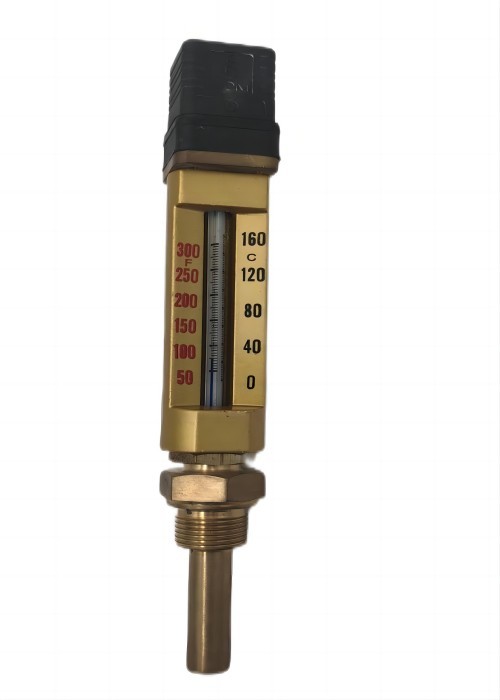
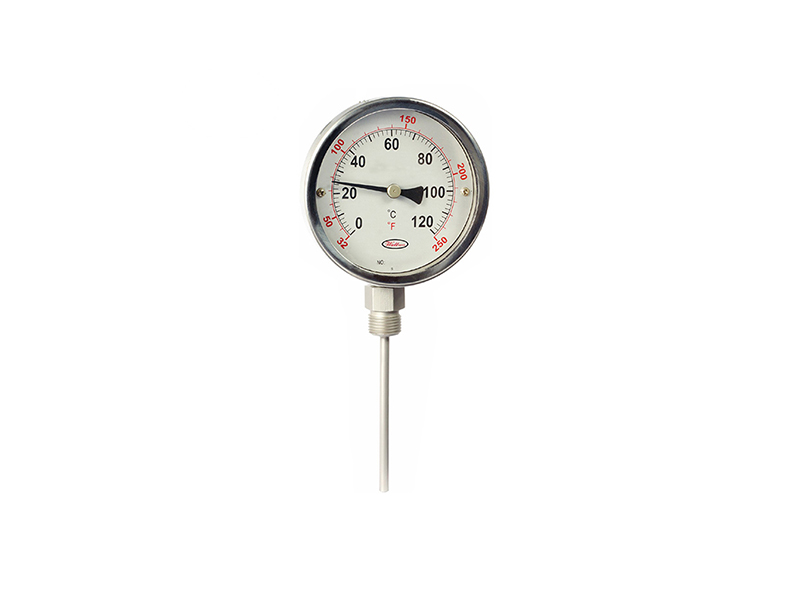
Industrial thermometers are temperature measurement instruments designed specifically for industrial environments. Their core function is to convert temperature signals into readable data through physical or electronic principles, enabling operators to monitor temperature changes during production in real time. Compared to household thermometers, industrial thermometers offer three significant advantages:
Wider Measurement Range
Covering extreme temperature ranges from -200°C to 3000°C, they meet diverse needs, from ultra-low temperature refrigeration to high-temperature smelting.
Higher Environmental Adaptability
With a corrosion-resistant, explosion-proof, waterproof, and dustproof design, they can operate continuously in harsh environments such as high vibration, high humidity, and corrosive gases.
More Accurate Measurement Performance
Through professional calibration technology, measurement errors are controlled within a range of ±0.1°C to ±1°C, ensuring the reliability of key process parameters.
Analysis of Five Mainstream Technology Types
Based on their operating principles, industrial thermometers can be divided into the following five types, each with its own unique application scenarios:
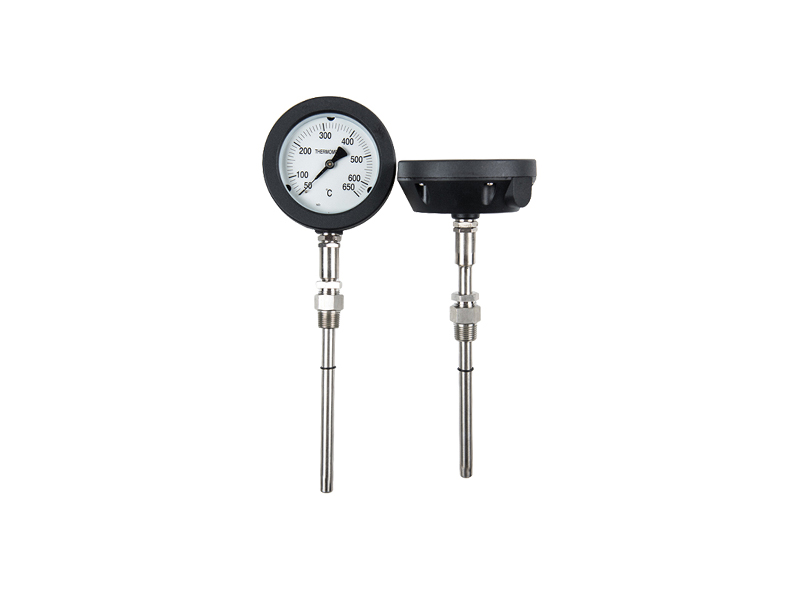
By stacking two metal sheets with different expansion coefficients, they bend and deform when the temperature changes, driving a pointer to indicate the temperature. Suitable for measuring the surface temperature of mechanical equipment, such as motor casings and pipe exteriors, they offer the advantages of low cost and the absence of a power source.
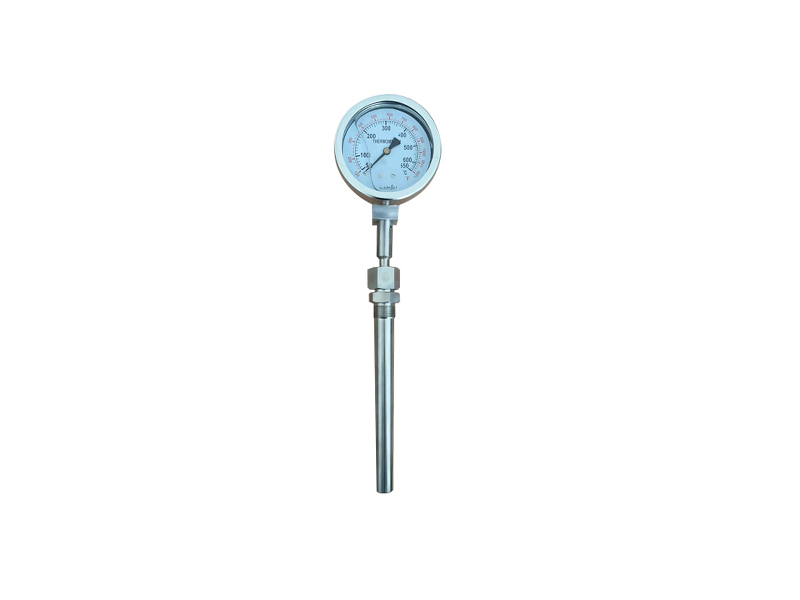
Pressure Thermometer
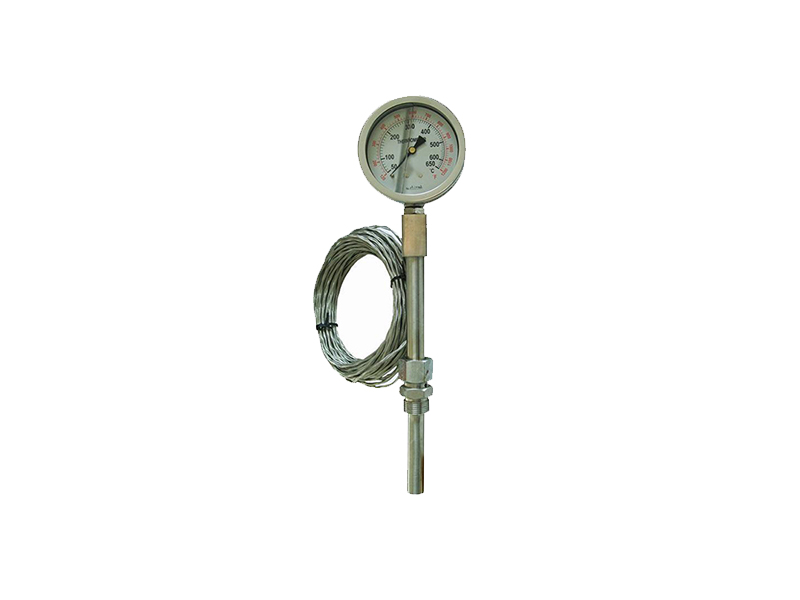
Utilizing the temperature-dependent pressure variation of the working medium within a closed system, a spring tube pressure gauge displays the temperature value. Commonly used for remote temperature monitoring of large equipment such as storage tanks and boilers, these thermocouples can measure temperatures up to 100 meters away.
Based on the Seebeck effect, the temperature sensing element consists of two dissimilar metal wires, generating an electromotive force proportional to the temperature. Suitable for high-temperature environments (>800°C), such as in metallurgy and ceramic firing, they offer fast response and long life. Resistance thermometers
Utilizing the property that a conductor's resistance changes with temperature, platinum resistance thermometers (PT100) are commonly used as temperature sensing elements. They offer high-precision measurements within a range of -200°C to 650°C and are widely used in temperature-sensitive applications such as laboratories and electronics manufacturing.

Measure surface temperature by receiving infrared energy radiated by an object, enabling non-contact temperature measurement. They are suitable for measuring moving objects, hazardous environments, or hard-to-reach surfaces, such as in-line temperature measurement in glass production lines.
Four Key Considerations When Selecting a Suitable Industrial Thermometer
Selecting the appropriate industrial thermometer requires a comprehensive assessment of the following factors to avoid measurement errors or equipment damage due to device mismatch:
Measurement Range Compatibility
Cold storage monitoring requires a range of -40°C to +20°C, while furnace temperature measurement requires a pyrometer rated at over 2000°C. An aluminum plant suffered a thermometer meltdown due to the incorrect range selection, resulting in direct economic losses exceeding 50,000 yuan.
Accuracy Requirements
The electronics manufacturing industry typically requires an accuracy of ±0.5°C, while ±2°C is sufficient for general warehousing. A semiconductor company saw a 15% increase in product yield after adopting 0.01-grade standard platinum resistance thermometers.
Environmental Adaptability Design
In corrosive environments, thermometers with Hastelloy sheaths should be used; in environments with strong electromagnetic interference, shielded compensating wires should be selected. A chemical plant reduced its equipment failure rate by 70% by upgrading its protection level.
Mounting Method Selection
Flange mounting is recommended for pipe temperature measurement, while magnetic mounting is suitable for surface temperature measurement.
The Value of Professional Manufacturers: Double Guarantee of Accuracy and Reliability
In the field of industrial thermometers, it is crucial to select a professional manufacturer with R&D capabilities and production experience. Excellent manufacturers not only provide products that comply with international standards (such as IEC and ASTM) but also offer customized solutions tailored to specific customer needs. From material selection and production processes to factory calibration and after-sales service, every step is rigorously controlled to ensure the long-term and stable operation of the thermometer in complex industrial environments.
If you're looking for high-performance industrial thermometer solutions, KB Instruments & Meter, a leading manufacturer with over 20 years of experience in temperature measurement technology, offers a full range of products, including bimetallic, thermocouple, and RTD sensors. We are ISO9001 certified. Our technical team can provide free consultation and help you precisely match your application to your specific needs, making temperature control simpler and more reliable. Contact us today to embark on a new era of efficient industrial temperature measurement!
I want to comment
Recommended Products
Recent News
1.Commercial Pressure Gauge Common Faults and Solutions
2020-08-062.How much do you know about remote reading thermoometer?
2020-08-043.The working principle and application of Mask Thermometer
2020-08-014.What are the common faults of Exhaust gas thermometer
2020-08-165.Application of NauticalThermometer
2021-05-146.Factors affecting the error of Socket Connected thermometer
2021-02-227.Principle of Mask Thermometer
2020-08-19




View More(Total0)Comment lists