



Dry vs. Liquid-Filled Pressure Gauges: Which One Do You Need?
 Aug 20, 2026|
 View:325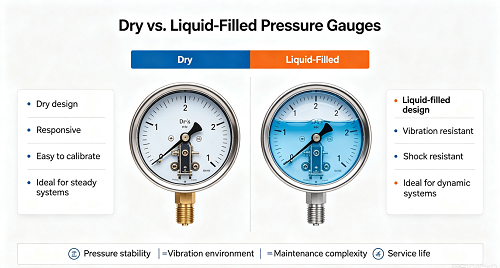
You need a liquid-filled pressure gauge for shaky, pulsing, or outdoor areas. You choose a dry pressure gauge for still, dry indoor setups. Picking the right gauge stops machine breakdown in tough jobs.
You must look at four main factors during your choice: shaking level, air temperature, wetness exposure, and basic budget. In 2025, the global pressure gauges market size hit 1.5 billion dollars. This number shows how much heavy industries depend on exact tools. Shaky systems need tough Oil-Filled Pressure Gauges to steady your readings. Meanwhile, a standard pressure gauge works well in dry pipes. Every gauge needs careful setup to guard your system pressure and maintain long-term accuracy.
Key Takeaways
Dry pressure gauges work best in quiet, steady indoor settings.
Liquid-filled gauges protect inside parts from strong machine shaking.
Cases filled with oil block moisture from the outside and keep the dial lenses clear.
Choosing the right pressure gauge stops machines from breaking and lowers your future repair costs.
Overview of Dry Pressure Gauge Applications
Operating Mechanics and Benefits
A dry pressure gauge reads force in calm fluids using direct mechanical motion. Inbound fluid flows past the socket and fills a curved Bourdon tube. As pressure expands the tube, the tip moves outward. A small link shifts this motion to a main sector gear. An internal spring holds gear teeth tight in a single direction. This step spins a gear shaft, moving the pointer across a dual PSI and kPa scale.
Changzhou KB Instruments makes dry pressure gauges with tough black steel cases and copper alloy insides. The PG-01, PG-01E, and PG-01F models use built-in valve bodies for fast connection. These choices lower your buying costs and make setup quick for your team. Most models match ASME B40.100 Grade B accuracy rules.

You can place dry pressure gauges in safe areas without heavy shaking or sudden fluid surges. Typical uses include:
HVAC system ducts and heating lines
Water testing pipes and filter units
Commercial gas test pressure setups
Limitations in Dynamic Settings
Heavy system shaking creates clear problems for dry mechanical tools over time. Constant motion shakes the pointer, which makes needle values hard to read during checks. Regular pressure shifts cause internal delay errors of 0.2% to 0.5% overall. Uneven fluid surges wear down inside gear teeth fast.
A dry gauge in a rough space lasts just 6 to 24 months before breaking. Meanwhile, liquid-filled options run well for 5 to 10 years. Bad weather builds inside water drops that fog up the lens. Outside moisture also rusts moving copper alloy parts inside open cases. Avoid mounting a dry pressure gauge near shaky pumps or large pressure surges.
Mechanics of a Liquid-Filled Pressure Gauge

Vibration Damping and Fluid Options
A liquid-filled pressure gauge protects internal gears against harsh machine shaking. The thick fluid surrounds inside parts, absorbing motion energy as components move. This process softens mechanical shocks, stops needle shaking, and keeps pressure readings steady on pulsing equipment. The fluid continuously coats gear teeth, cutting down wear from quick movements. Installing a special liquid-filled pressure gauge improves long-term accuracy near large hydraulic pumps.
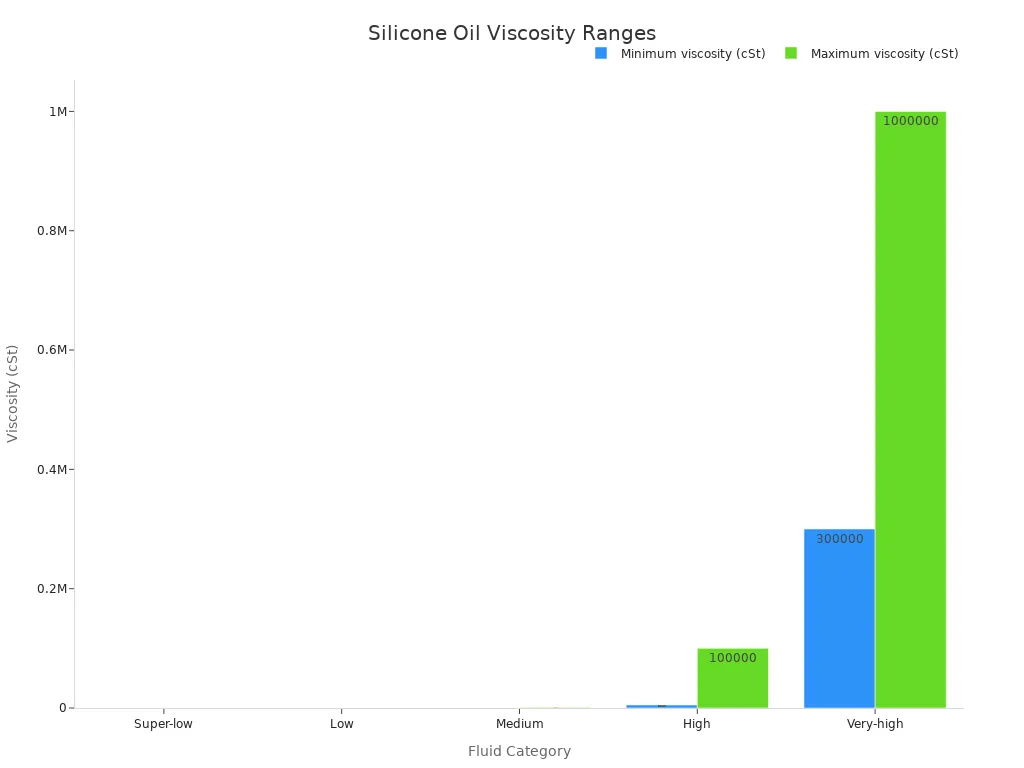
You select specific liquid fills according to expected workplace temperature ranges. Regular glycerin works well across a temperature range of -20°F to +200°F (-29°C to +93°C). Harsh outdoor locations need silicone oil, which operates from -40°F to +400°F (-40°C to +400°C). Silicone keeps steady thickness through huge temperature shifts, keeping quick needle response. Total silicone damping fluid spans from extremely low to very high thickness, running 0.65 to 1,000,000 cSt at 25°C.
Internal Condensation and Corrosion Protection
Tough oil-filled pressure gauges use a completely sealed outer case design. The liquid fill forms an ongoing protective shield, stopping outdoor dampness, small dust, and harmful airborne gases. This closed design stops inside moisture buildup and lens fogging during fast temperature shifts, keeping the dial readable in humid weather. Factory teams trust a liquid filled gauge to stay clear during extreme weather changes.
This inner fluid layer guards moving copper alloy parts from rust and chemical damage. Removing internal water buildup maintains reading accuracy throughout routine daily pressure checks. Putting a basic dry pressure gauge in wet outdoor spots brings quick mechanical breakdown, but picking a sealed liquid gauge ensures reliable operation. Buying strong pressure gauges provides longer working life, cutting machine downtime during hard field work. This sturdy gauge design lengthens total working life for vital plant systems.
Difference Between Liquid-Filled and Dry Pressure Gauges
Knowing how liquid-filled and dry pressure gauges differ lets you pick the best tool for your plant. A basic dry pressure gauge is an affordable option for steady, clean settings. Comparing constant pressure to changing pressure helps you choose tough tools for lasting plant use. Still, rough factory settings need strong oil-filled pressure gauges to shield delicate inner parts. You should check shake levels, heat ranges, and pipe surges to keep your setup running safely.
Impact of Mechanical Vibration
Machine shaking harms gauge accuracy and shortens internal part life in production plants. Big machines like pumps, turbines, and compressors create constant shaking. This motion quickly moves inside gear links, connecting arms, and small bearings. Over time, continuous rubbing makes tiny metal dust in the case and shifts the pointer off zero. Unchecked shaking rapidly wears down gear teeth and bends tuned spring parts. Strong shaking can even knock the needle off, causing instant tool failure and unsafe unmonitored line pressures.
Performance Factor | Dry Gauge | Liquid-Filled Gauge |
|---|---|---|
Effect of vibration | High gear wear and pointer shaking | Glycerine dampens shock and reduces wear |
Service life in vibration | 3 to 12 months | 3 to 7 years |
Recommended calibration | Every 6 to 12 months | Every 12 to 24 months |
A liquid filled gauge absorbs shocks using fluid damping inside its case. The thick liquid coats moving parts and calms needle motion when machines shake hard. Constant oiling reduces friction, holds accurate tuning, and stops needle shaking during rough plant work. This fluid prevents gear wear, lengthens part life, and gives better accuracy when reading shifting pressure levels during regular maintenance checks.
Temperature Limits and Pressure Pulsation
Pressure surges create fast force jumps and fluid rushes in hydraulic lines and compressor pipes. Quick pressure changes strain the inner Bourdon tube through millions of tiny bends over short work periods. Unsteady pointer shaking makes clear readings tough for plant workers. High-surge setups often join liquid damping with a built-in snubber valve to shield the Bourdon tube from harsh repeating shocks. Liquid filled gauges smooth these fast surges, working like a helpful shock absorber during heavy work cycles.
Outside work areas handle changing weather, heavy moisture, and hot or cold air. Sun heat and rain cause inside water drops in unsealed gauge cases, fogging dial glass. The liquid fill stops water buildup and guards copper alloy parts against weather rust. Regular glycerine fluid works well in mild weather, while silicone handles big heat shifts and freezing air.
Buying simple dry pressure gauges cuts upfront costs by 20% to 40%. Conversely, getting a specialized liquid-filled pressure gauge costs about 2 to 4 times more initially. Yet, dry gauges in shaky spots break fast in 3 to 12 months, raising fix labor and stoppage time. A dry gauge needs tuning every 6 to 12 months, but a filled unit moves checks to 12 to 24 months. Fitting tough pressure gauges lowers your 5-year total costs while keeping steady performance across rough factory settings.
Advantages of Changzhou KB Oil-Filled Pressure Gauges
Heavy-Duty 304 Stainless Steel Construction
Changzhou KB crafts oil-filled pressure gauges using a tough 304 stainless steel case. The strong metal body shields inner moving parts from rough rust, outdoor weather, and wet chemical splashes. Your team can safely track intense force up to 15,000 PSI inside demanding factory environments. Furthermore, these special tools carry full CE certification to fulfill worldwide safety requirements across foreign markets.
Plant workers complete careful quality checks on every single item before shipping. Staff execute a tough 72-hour pressure cycling test on every built unit. This long trial period ensures total zero-leakage operation during sudden pressure jumps. You gain dependable performance across powerful hydraulic machinery, chemical processing facilities, and ocean oil lines.
Custom Pressure Ranges and Peak Value Monitoring
Plant managers can select custom units to match specific machine needs. Changzhou KB supplies readable dial sizes measuring 63mm, 100mm, and 150mm. You can select fitting connection threads that join your current piping setup without extra adapters. The following chart outlines standard connection choices for your crew:
Thread standard | Thread form / type | Sealing principle |
|---|---|---|
NPT | Tapered pipe thread, 60° angle | Metal-to-metal interference on thread flanks |
BSPT | Tapered pipe thread, 55° Whitworth profile | Interference on thread flanks |
G / BSPP | Parallel straight thread, 55° Whitworth profile | Face seal using bonded washer |
Plant operators can install a second red needle on a basic pressure gauge. This movable tracker marks the highest pressure spike during sudden line surges. You can easily watch peak system stress without watching the tool constantly. Later, workers check the dial marker to confirm maximum force during daily maintenance checks. You select the ideal gauge size for your control panel. Installing custom liquid-filled pressure gauges boosts workplace safety and maintains steady plant operations. Our sturdy oil-filled pressure gauges safeguard costly equipment, whereas basic dry pressure gauges manage simple indoor tasks.
Your work area determines if you need a dry pressure gauge or a liquid-filled tool. Simple dry units work well in steady indoor locations. However, tough factory sites need shock protection to stop fast part damage. Changing fluid pressure demands a strong outer case.
Buying Changzhou KB oil-filled pressure gauges cuts long-term replacement costs. These tough tools soak up heavy machine shaking, stopping constant equipment downtime during hard daily tasks. Every strong gauge uses a sealed case to block dampness. This shape protects inner moving parts from weather rust. Reach Changzhou KB Instruments & Meter Co., Ltd. today to get custom measuring tools for your plant.
FAQ
Can glycerine pressure gauges handle freezing outdoor temperatures?
Glycerine works safely down to -30°C. You should select silicone filling for colder environments reaching -40°C. Silicone maintains steady viscosity during severe freezing weather. This choice prevents pointer drag and protects your equipment during extreme temperature shifts.
What is the maximum force limit for oil filled units?
You can track high system pressure up to 15,000 PSI with specialized stainless steel models. Standard options handle up to 10,000 PSI in heavy hydraulic setups. Factory teams test each unit for 72 hours to ensure complete zero-leak performance.
Why do dry units fog up during outdoor use?
Rapid heat shifts cause internal condensation inside unsealed housings. Ambient dampness enters open cases and leaves water droplets on lens glass. Sealed liquid chambers lock out surrounding moisture entirely, keeping your gauge display clean and clear.
How do liquid filled instruments protect internal gears?
Viscous fluid coats moving gear teeth and sector links. The liquid dampens heavy machine vibration, eliminating pointer flutter on pulsing equipment. Continuous lubrication cuts component friction, prevents gear wear, and maintains long-term accuracy.
Hi, I’m Niki, founder of Changzhou Yaobo Instruments & Meters Co., Ltd. and a senior instrumentation R&D engineer with over 20 years of experience in pressure measurement.
I specialize in pressure gauge selection, troubleshooting, and application solutions for demanding industries such as chemical, oil and gas, and metallurgy. Through this blog, I share practical insights from real-world industrial experience to help professionals select reliable instruments and avoid common application issues.
I want to comment
Recent News
1.Dry vs. Liquid-Filled Pressure Gauges: Which One Do You Need?
2026-08-202.What is a Diaphragm seal Pressure gauge and how does it work?
2026-08-143.Top Pressure Gauge Manufacturers in China 2027
2026-07-234.Oil Filled Pressure Gauge vs Dry Pressure Gauge: Which One Is Better?
2026-07-285.A guide to choosing the right nautical barometer for your needs
2026-07-026.Pressure Gauges Used in Industrial Equipment: Complete Guide
2026-07-10




View More(Total0)Comment lists