



How to Choose an Industrial Thermometer for Extreme Heat Conditions
 Oct 20, 2026|
 View:13
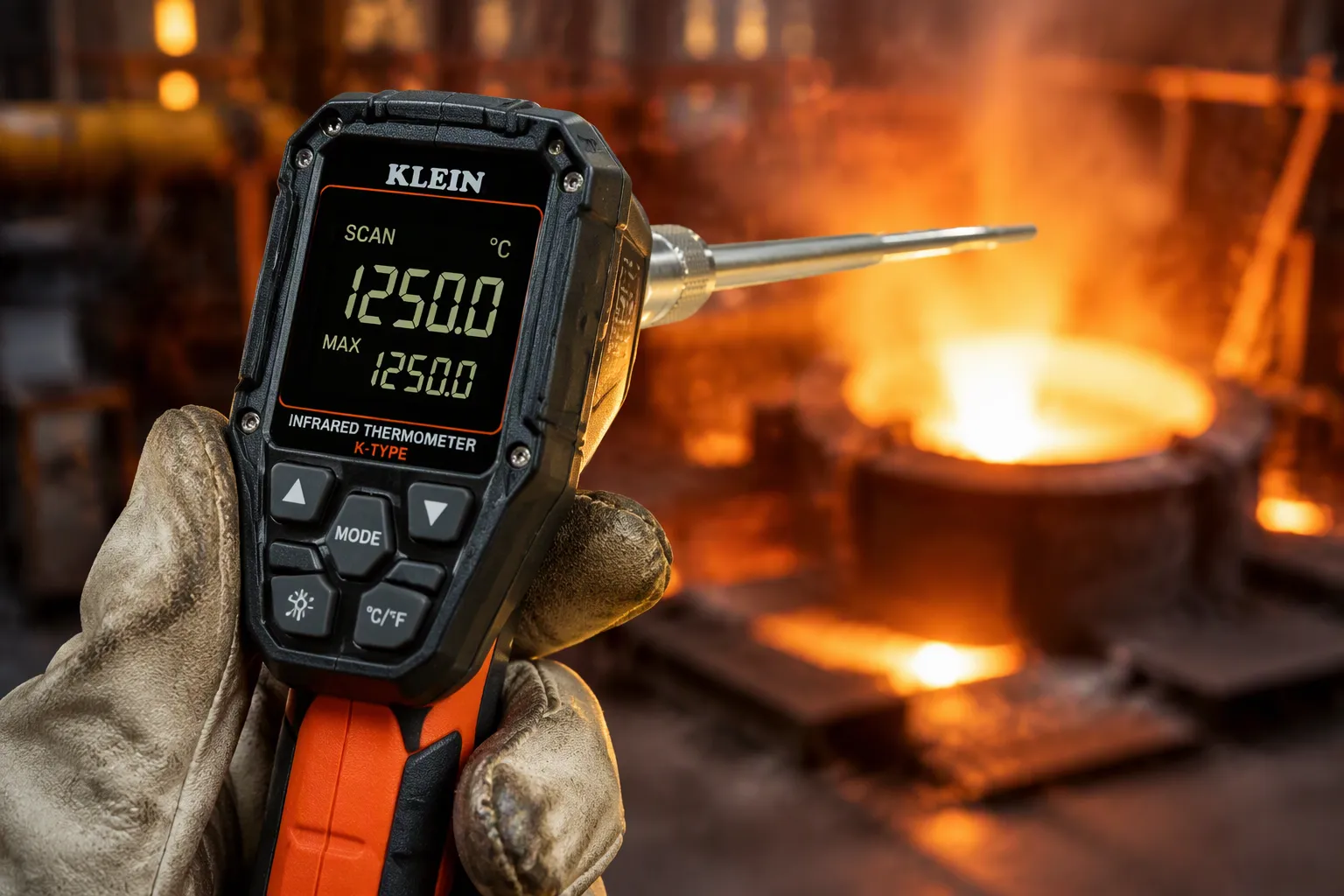
Four factors decide the choice: temperature range, accuracy, response time, and durability. Engineers who select industrial thermometer designs for high-temperature environments weigh these factors against real process conditions. This selection guidance treats each factor as a trade-off, not a ranking.
What counts as extreme heat varies by process. In industrial settings, extreme conditions, including high temperatures near the upper scale of standard instruments, demand careful matching of sensor type to the medium. Steam lines, exhaust streams, and molten-material handling each stress a thermometer differently.
No single model suits every application. The right pick depends on how hot the process runs, how fast readings must update, and how much mechanical stress the probe will face. Buyers should treat this guide as a neutral decision framework, then confirm the temperature limits against their own process data.
Key Takeaways
Match the thermometer's temperature range to your process conditions.
Choose between contact and non-contact sensors based on your application.
Balance accuracy and response time to meet your measurement needs.
Select durable materials and designs to withstand extreme heat and stress.
Follow proper installation and maintenance practices for reliable readings.
How To Select Industrial Thermometer Types
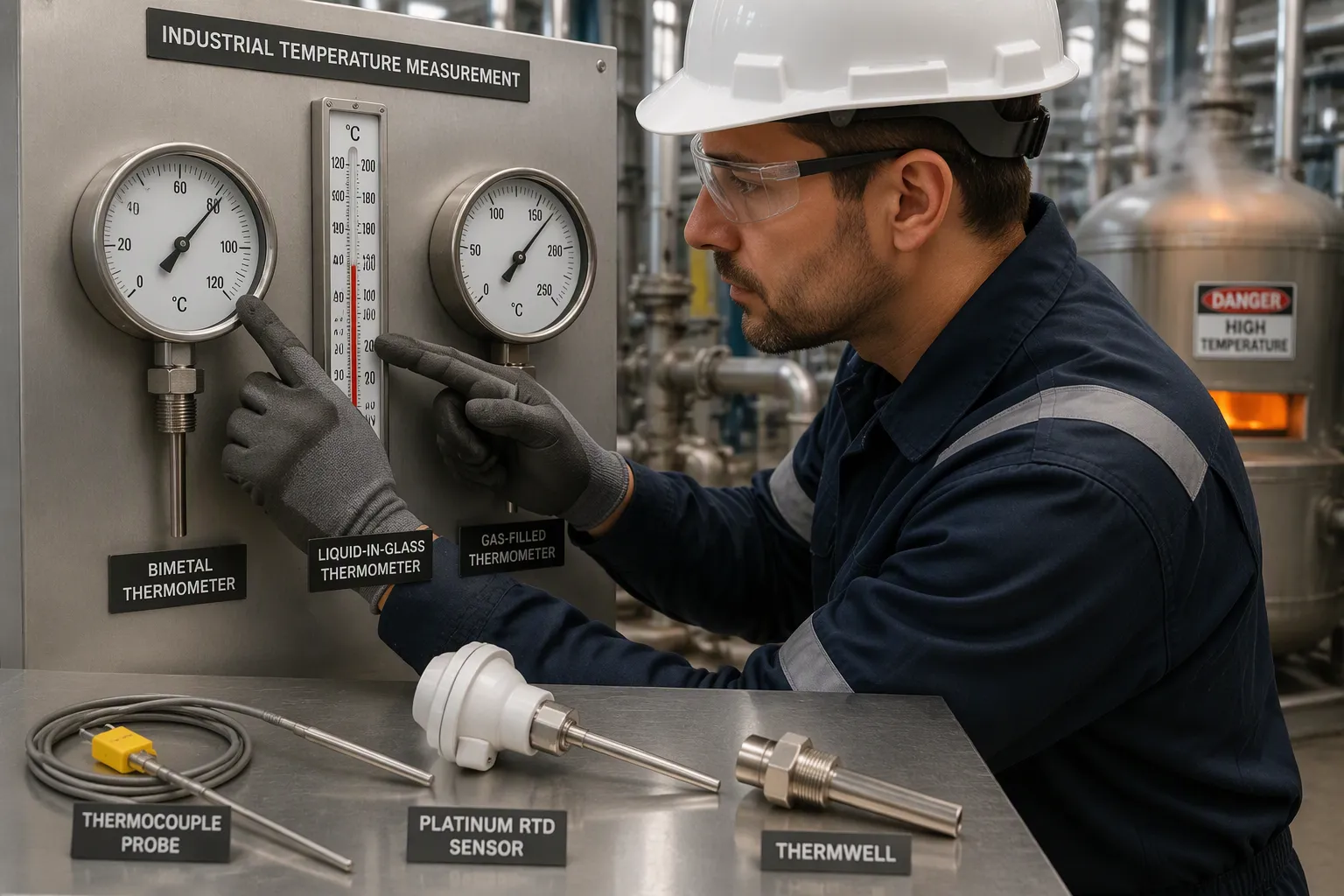
Bimetal, Liquid-In-Glass, And Gas-Filled
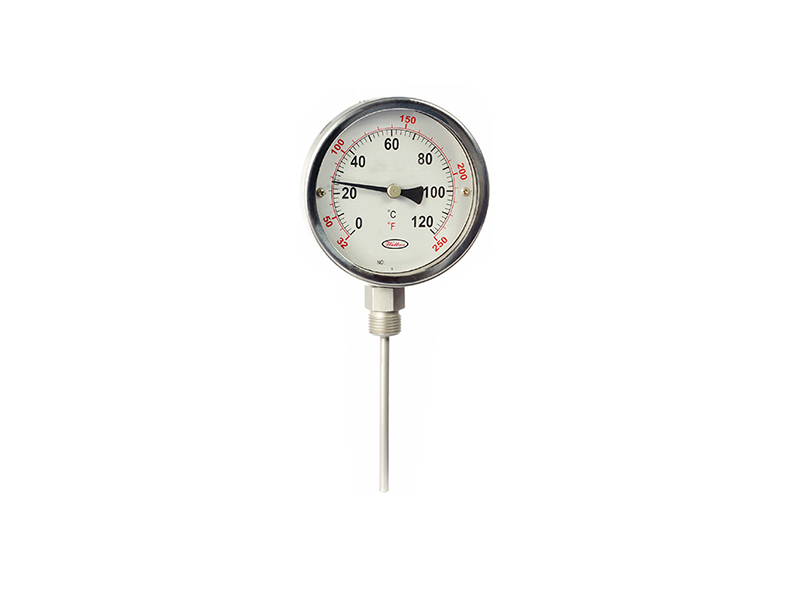
Each mechanical design fits a different set of process conditions. Bimetal thermometers rely on a bonded strip that flexes as temperature changes. Their accuracy runs ±1–2% of full scale, and case filling protects the measuring element from vibration and moisture. Liquid-in-glass units offer fine resolution: modern industrial spirit-filled or Galinstan versions span -50°C to 350°C with high accuracy, avoiding the environmental hazards of traditional mercury. Gas-filled thermometers cover a wide temperature range of -200°C to 650°C (-320°F to 1,200°F). Inert gas filling and a Bourdon-tube, movementless design resist shock and vibration, making them ideal for remote or hazardous installations.
Thermometer type | Temperature range | Accuracy specification |
|---|---|---|
Liquid-in-glass (Industrial Spirit/Galinstan) | -50°C to 350°C | High resolution |
Bimetal | -80°C to +500°C (depending on range) | ±1–2% of full scale |
Gas-filled | -200°C to 650°C | ±1% of full scale |
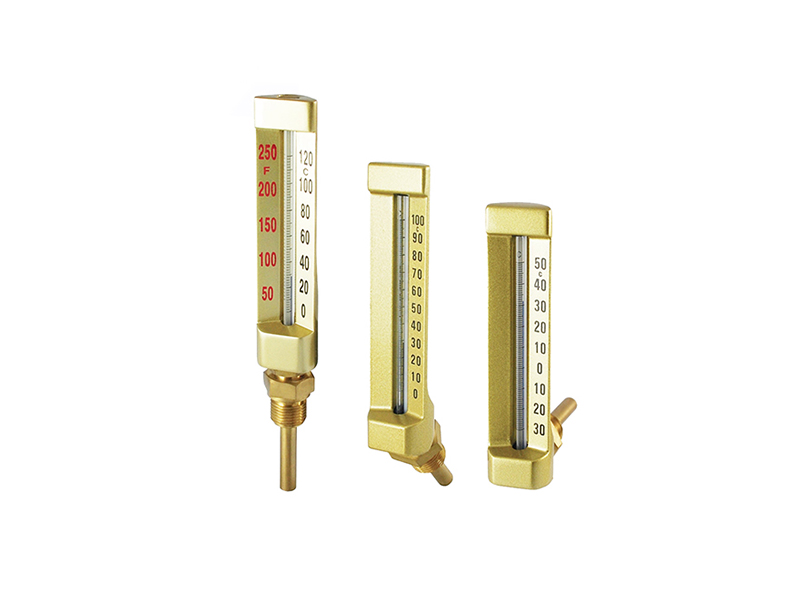
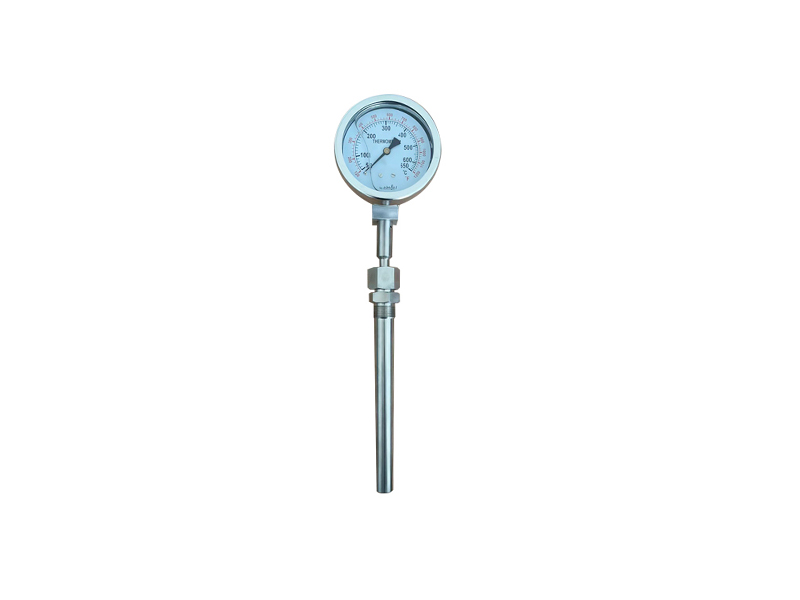
When selecting industrial thermometer hardware for extreme environments, matching the dial size, connection style, and thermowell material is critical. KB Instruments specializes in heavy-duty solutions designed for harsh conditions. Our lineup includes rugged V-Line industrial bimetal and specialized high-temperature gauges, as well as capillary remote-reading models that allow safe monitoring from a distance. For high-pressure and high-vibration environments like diesel engines, our thermo-manometers combine temperature and pressure measurement in one robust dial. Additionally, we offer versatile socket-connected thermometers for easy pipeline installation. For critical zones, we use silicone oil-filled (liquid-filled) cases to dampen pointer flutter and protect internal mechanisms. Our instruments conform to strict industry standards including EN 13190 and ASME B40.3, featuring dual °C/°F scales and compatibility with various high-temperature thermowell materials (SS316, Inconel, or Ceramic).
Thermocouples, RTDs, And Ceramic Designs
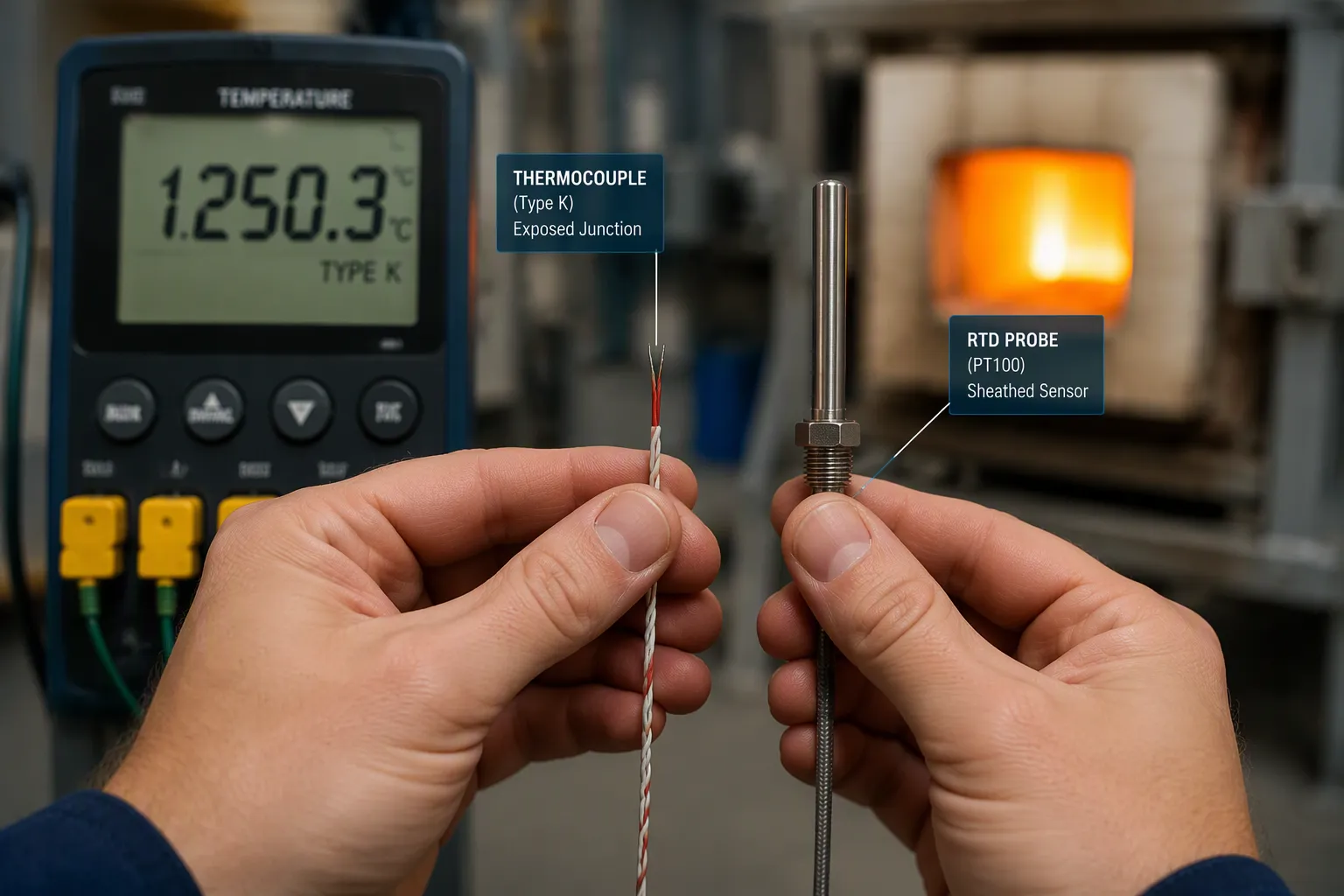
Electrical sensors extend the reach of temperature probe sensors into higher heat and faster loops. Thermocouples suit rugged service across a wide span: common types run from about -200°C to +1250°C, specialty types reach roughly 2300°C, and base-metal accuracy sits near ±1°C or 0.75%. RTDs, typically platinum, deliver very high accuracy and stability, with PT100 units often at ±0.1°C or better. Standard RTDs are rated to about 600–650°C, and specialty designs reach roughly 1000°C. They need excitation current, respond more slowly, and cost more.
Ceramic designs handle extreme cases above metal limits. Ceramic-sheathed K-type thermocouples survive about 1300–1370°C in kilns and furnaces, and alumina, silicon carbide, or quartz sleeves serve even higher or transparent probes. These designs suit extremely high temperatures with limited mechanical stress. Infrared, a non-contact option, is covered in the next section.
Choosing the best type of temperature probe starts with the medium and the stress it imposes. The right probe type balances range, accuracy, and response against the mounting environment. A surface temperature thermometer or a contact probe may serve one line, while a ceramic-sheathed unit serves a kiln. Review temperature probe types against your process data before committing.
Match Temperature Sensors To The Heat
Contact Versus Non-Contact Temperature Sensors
Contact and non-contact designs serve different process conditions. A contact temperature sensor must touch the target and wait for thermal equilibrium. A non-contact temperature probe sensor reads emitted radiation without contact. The table below compares the two families.
Feature | Infrared (non-contact) Sensors | Contact Sensors |
|---|---|---|
Measurement method | Detects infrared radiation without touching the target | Requires physical contact with the target |
Response time | Milliseconds | Seconds |
Durability | No wear from contact | Subject to wear and contamination |
Best suited for | High-temperature, moving, or hazardous environments | Stable, low-to-medium temperature conditions |
Typical applications | Steel, aluminum extrusion, glass, plastics, food safety | HVAC, electronics, lab testing, refrigeration |
Contact temperature sensors fit stable lines where the probe can sit in the medium. Non-contact units fit moving targets, hazardous zones, and hot surfaces where a probe cannot survive. Each option works best when matched to the process, not ranked against the other.
Infrared Range, Emissivity, And Distance
Infrared (IR) thermometers infer surface temperature from detected radiant energy. The emitted energy depends on the surface's emissivity, so the reading must be corrected for that value. Polished metal has low emissivity and will produce false readings if the setting is not adjusted.
Low-emissivity surfaces act like mirrors: instead of measuring the object's own temperature, the camera detects reflected temperature from surrounding objects. If target emissivity is below 0.5, an accurate temperature measurement is unlikely, and increasing the target's emissivity should be considered.
The distance-to-spot (D:S) ratio expresses the field of view. A 12:1 sensor means the spot diameter is 1 unit at 12 units of distance. The spot grows linearly with distance, so a higher ratio lets you stand farther from a small target. A surface temperature thermometer with poor optics shows a wide spot and blends background heat into the reading. When measuring surface temperature on a small part, confirm the spot fits inside the target. A surface temperature thermometer validated against a contact probe gives the most trustworthy result.
Criteria For Temperature Probe Sensors
Range and accuracy set the outer limits of what a probe can deliver. Response time decides how quickly the reading tracks a changing process. Durability determines how long the probe survives the heat. Buyers weigh all three against the application, and no single criterion wins by default.
Temperature Sensor Range And Accuracy
Readout range is the span of temperatures a probe can measure before it drifts or fails. Accuracy is how close the displayed value sits to the true value. These two properties pull against each other. A wide temperature range often costs some probe accuracy, and a tight tolerance often narrows the usable span.
A thermocouple offers an extensive temperature range of -200°C to 1750°C (-328°F to 3182°F). Regarding accuracy, RTDs are the only option above 130°C (266°F), while below that level thermistors are more accurate.
Sensor Type
Typical Temperature Range
Accuracy/Stability Note
Thermocouple
-200°C to over 2000°C (type-dependent)
Favored for extreme temperatures
RTD
Up to ~850°C
Superior accuracy and stability within its range
A buyer who needs high accuracy in a moderate band should look at an RTD or thermistor. A buyer who needs a wide temperature range in a furnace should accept a looser tolerance and choose a thermocouple. Define temperature and accuracy requirements from the process data first, then screen temperature probe sensors against that envelope.
Temperature Probe Sensor Response Time
Response time is the interval a probe needs to register a step change in the medium. A fast probe follows a rising flue gas stream closely. A slow probe lags behind and reports a smoothed value. Thermocouples respond through the thermoelectric effect, and RTDs respond through a resistance change, which is inherently slower.
Configuration | Response Time |
|---|---|
Bare thermocouple junction | Milliseconds |
Sheathed Pt100 RTD probe | 2–15 seconds (63% response), depending on sheath diameter and installation |
For applications requiring fast thermal response (engine exhaust, flue gas monitoring, food-contact surface temperature during frying or grilling), a thermocouple is likely the better choice regardless of the accuracy difference.
Sheath material and thermowell design belong in the same decision. Inconel 600/625 retains mechanical strength under high-temperature oxidation in furnaces and refineries. SS316/316L resists chlorides and aggressive chemicals in chemical plants and marine service. Hastelloy C276 suits acid plants and petrochemicals. For extreme temperatures above 1000°C, ceramic thermowells provide essential protection in kilns and furnaces. Flanged thermowells give a strong seal for high-pressure lines, and weld-in thermowells suit steam service. Tapered tips speed heat transfer, and excessive wall thickness adds thermal mass that slows the reading. These are the features to consider for temperature sensors in hot service. A buyer who selects industrial thermometer hardware on range alone will often revisit the choice once response and sheath life enter the picture.
Install, Use, And Maintain
Mounting And Placement In Hot Zones
Placement decides whether a probe reports the process or the room. Follow these steps at the mounting point:
Install the temperature probe sensor at the desired measurement location.
Ensure proper placement and secure attachment for accurate readings.
Insert the sensor into a thermowell for protection, or directly into the process for contact measurement.
A thermowell shields the element from flow, pressure, and chemical attack. It also lets you remove the probe without breaking the line. Keep the assembly 3–4 feet away from vents or sunlight, and mount the dial 4–5 feet from the floor. Allow 5–10 minutes for stabilization before you record a value. Shield any surface temperature thermometer from direct sun, because solar gain lifts the reading above the true temperature.
Best Practice | Recommended Action | Effect |
|---|---|---|
Distance from heat sources | Keep 3–4 feet from vents or sunlight | Avoids false high readings |
Mounting height | Position 4–5 feet from the floor | Gives a representative reading |
Stabilization time | Allow 5–10 minutes | Reaches equilibrium |
Sun shielding | Protect from direct sun | Prevents elevated readings |
Vibration is a separate threat. Diesel exhaust gas thermometers use a design that eliminates reading difficulties caused by vibration, and the same logic applies to any probe on a reciprocating engine or compressor. Rigid mounting and case filling reduce pointer flutter.
Calibration And Long-Term Reliability
Calibration confirms that a probe still reports the true temperature. Schedule it against your process tolerance, not a fixed calendar alone. Thermistors and NTC/PTC types drift with age, so periodic calibration keeps accuracy beyond standard sensor limits. A surface temperature thermometer needs a check against a contact probe before you trust it on a critical part.
Long-term reliability comes from routine inspection. Look for sheath corrosion, cracked ceramic sleeves, and loose fittings. Replace a thermowell that shows wall loss before it fails under pressure. These are the features to consider for temperature sensors in hot service: sheath material, well design, and a calibration record. A disciplined schedule protects temperature measurement quality across the plant.
Four non-negotiables decide the choice: range, accuracy, response time, and durability. Each one ties back to your process. A steam line, a kiln, and a diesel exhaust stream stress a probe in different ways. The right pick follows the conditions, not a catalog ranking.
A short decision sequence keeps the selection disciplined:
Confirm the temperature range against your process data.
Set the accuracy and response time your loop requires.
Weigh durability and maintenance for the mounting point.
Use this sequence to select industrial thermometer hardware with confidence. Check temperature probe sensors against the same envelope, and validate any surface temperature thermometer against a contact reading. The best industrial thermometer is the one matched to the process conditions.
FAQ
Which thermometer type suits a steam line?
A bimetal or gas-filled unit fits steam service well. Bimetal accuracy runs ±1–2% of full scale, and case filling protects the element. Gas-filled designs span -200°C to 650°C with stable accuracy. Fit a thermowell for protection, then confirm the range against your line data.
How do I pick between a thermocouple and an RTD?
Match the sensor to the heat and the tolerance. Thermocouples cover the widest span, from about -200°C to +1250°C for common types. RTDs hold tighter accuracy, often ±0.1°C or better, but standard units stop near 600–650°C. Weigh range against precision.
Why does emissivity matter for infrared readings?
Infrared units infer temperature from emitted energy, and emissivity sets that energy. Polished metal has low emissivity and can mislead the reading. Adjust the setting before you trust the value. A surface temperature thermometer works best on surfaces with higher emissivity.
How fast should a probe respond?
Response time depends on the design. A bare thermocouple junction reacts in milliseconds. A sheathed Pt100 RTD probe needs 2–15 seconds for a 63% response. Thin sheaths and tapered tips speed heat transfer. Match the speed to how fast your process changes.
What maintenance keeps readings trustworthy?
Schedule calibration against your process tolerance. Inspect sheaths for corrosion and ceramic sleeves for cracks. Check fittings for looseness. Replace a thermowell that shows wall loss before pressure causes failure. A written calibration record protects measurement quality over the service life.
Need a Custom Extreme-Heat Thermometer Solution?
Every high-temperature process is unique. Whether you need a heavy-duty bimetal gauge, a capillary remote-reading system, or specialized thermowells, KB Instruments engineers are ready to help.
Contact Our Engineering Team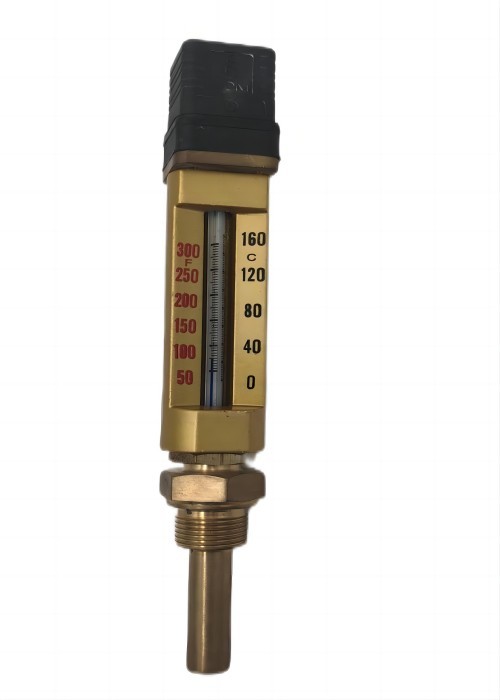




View More(Total0)Comment lists