



What Is a Pressure Gauge for a Medical Device?
 May 18, 2026|
 View:510
Introduction
In modern healthcare, every life-support machine, monitoring system, and therapeutic device relies on precise pressure control. A medical pressure gauge is the critical component that delivers accurate, stable, and safe pressure readings for clinical and home medical equipment. If you are an engineer, hospital procurement manager, OEM designer, or medical equipment technician asking, What is a pressure gauge for a medical device?, this complete guide will give you clear, professional, and easy-to-understand answers.
This article fully explains the definition, working principle, key specifications, types, applications, safety standards, selection, and maintenance of the medical pressure gauge. Written in plain language without complicated jargon, it helps you understand how these specialized gauges ensure patient safety, equipment reliability, and clinical accuracy.
Changzhou KB Instruments & Meter Co.,Ltd specializes in manufacturing high-quality medical pressure gauge models such as the PG-12 series. Our gauges feature oil-free cleaning, ±1.6% full-scale accuracy, brass connections, and compact designs, fully meeting strict medical device requirements. This guide helps you understand what is a pressure gauge for a medical device and why choosing a reliable medical pressure gauge is essential for healthcare.
1. What Is a Pressure Gauge for a Medical Device?
A medical pressure gauge is a precision instrument specifically designed and manufactured for medical equipment, used to measure and display pressure in clinical monitoring, gas delivery, therapeutic devices, and life-support systems. Unlike standard industrial gauges, a medical pressure gauge is built for ultra-high accuracy, hygiene, biocompatibility, stability, and long-term reliability to protect patient safety.
Every medical pressure gauge undergoes strict production, cleaning, and testing procedures. Key features include oil-free internal components, non-toxic materials, clear dials, stable performance, and compliance with medical device regulations. These gauges are used in blood pressure monitors, ventilators, anesthesia machines, oxygen therapy devices, surgical equipment, and various portable medical tools.
In short, a medical pressure gauge is not just a pressure meter — it is a safety-critical component that directly affects treatment accuracy and patient well-being.
2. Core Working Principle of a Medical Pressure Gauge
Most medical pressure gauge models use the proven Bourdon tube principle, which provides stable mechanical measurement without electricity — ideal for critical medical environments.
Inside the gauge, a curved, elastic metal tube (usually brass or medical-grade alloy) expands and straightens slightly when pressure is applied. This movement is transferred through a precision gear mechanism to a pointer, which indicates the pressure value on a clear dial.
Medical-grade design enhancements ensure high sensitivity for low-pressure monitoring, stable readings under vibration and temperature changes, long service life with minimal drift, and an oil-free and contamination-free internal structure.
This simple, robust mechanism makes the medical pressure gauge highly reliable in hospitals, clinics, emergency care, and home healthcare.
3. Key Specifications of a High-Quality Medical Pressure Gauge
Understanding these specifications helps you fully grasp what is a pressure gauge for a medical device and select the right model. Based on the Changzhou KB PG-12 series:
Basic Specifications
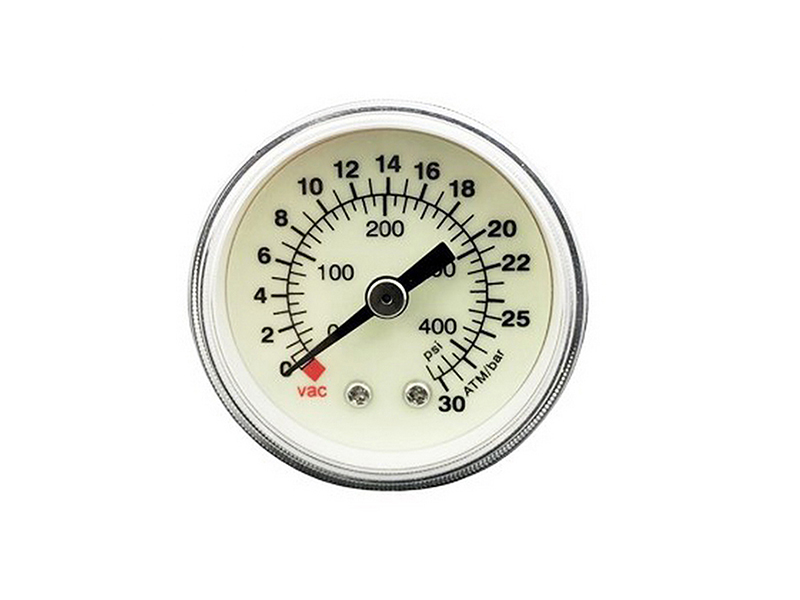
Dial Size: 1.5 inches (compact for medical devices)
Accuracy: ±1.6% of full scale (high medical precision)
Pressure Range: 0–400 psi (common for medical gas and therapeutic devices)
Connection Thread: M10×0.75 or 1/8PT (standard for medical equipment)
Connection Material: Brass (corrosion-resistant, non-contaminating)
Case: White or black medical-grade plastic
Lens: Shatterproof PC (safe for clinical use)
Operating Temperature: 5°C ~ 60°C
Medical-Specific Features
Oil-free cleaning to prevent contamination
Smooth surfaces for disinfection
Clear white or luminous dials for easy reading
Low-friction movement for stable readings
Shock-resistant design for transport and use
These specifications ensure the medical pressure gauge performs safely and accurately in real medical environments.
4. Types of Medical Pressure Gauges and Their Uses
4.1 Anesthesia & Respiratory Gas Gauges
Used in anesthesia machines and ventilators to monitor oxygen, air, and nitrous oxide pressure. Requires high accuracy and stable performance.
4.2 Blood Pressure Monitor Gauges
Core component of manual sphygmomanometers. Features a 0–300 mmHg range, clear dial, and precise movement for accurate blood pressure measurement.
4.3 Oxygen Therapy Gauges
Used in oxygen regulators, concentrators, and cylinders. Ensures safe and consistent oxygen delivery to patients.
4.4 Surgical & Therapeutic Device Gauges
Used in minimally invasive tools, balloon catheters, and surgical inflation devices. Must be compact, hygienic, and highly reliable.
4.5 Portable & Home Care Gauges
Small, lightweight, and durable for portable monitors, nebulizers, and home healthcare devices.
Each type of medical pressure gauge is engineered to meet specific clinical requirements.
5. Main Applications of Medical Pressure Gauges
A medical pressure gauge is widely used across nearly every medical field:
Blood Pressure Measurement – Core component of mechanical sphygmomanometers used in clinics, hospitals, and homes.
Respiratory & Ventilator Equipment – Monitors airway pressure in ventilators, CPAP machines, and oxygen delivery systems.
Anesthesia Machines – Controls and displays gas pressure to ensure safe and precise anesthesia delivery.
Surgical Instruments – Used in minimally invasive surgery, inflation devices, and pressure-controlled surgical tools.
Emergency & Ambulance Devices – Portable and rugged for emergency oxygen, suction, and life-support equipment.
Home Healthcare – Used in nebulizers, oxygen concentrators, and home monitoring devices.
Clinical Diagnostic Equipment – Found in pressure-monitoring diagnostic tools for pulmonary, cardiovascular, and urological systems.
Wherever precise pressure control is needed, the medical pressure gauge ensures safety and performance.
6. Critical Differences: Medical Pressure Gauge vs. Industrial Gauge
Many buyers ask what is a pressure gauge for a medical device compared to industrial models — the differences are life-critical:
Accuracy & Precision: Medical gauges offer ±1.0% to ±1.6% FS; industrial gauges typically ±1.6% to ±2.5% FS.
Hygiene & Cleaning: Medical gauges are 100% oil-free, non-toxic, and disinfectable; industrial gauges use standard cleanliness.
Materials & Biocompatibility: Medical gauges use medical-grade plastic, brass, and non-contaminating components.
Stability & Calibration: Medical gauges feature extremely low drift and long calibration intervals.
Regulatory Compliance: Medical gauges meet medical device safety standards; industrial gauges follow industrial pressure standards.
Never replace a medical pressure gauge with an industrial gauge — patient safety depends on it.
7. How to Select the Right Medical Pressure Gauge
Follow this practical 7-step guide to choose the perfect medical pressure gauge:
Step 1: Confirm Pressure Range – Match the range to your device (common: 0–300 mmHg, 0–400 psi).
Step 2: Check Accuracy Requirement – Clinical use requires ±1.6% FS or better.
Step 3: Verify Connection Size & Thread – Standard: M10×0.75 or 1/8PT.
Step 4: Choose Dial Type – Standard white or luminous for low-light conditions.
Step 5: Ensure Medical-Grade Design – Oil-free, hygienic, non-toxic, shatterproof lens.
Step 6: Check Environmental Resistance – Temperature range: 5°C ~ 60°C.
Step 7: Select a Reliable Medical Manufacturer – Choose an experienced supplier with strict quality control.
By following these steps, you select a medical pressure gauge that ensures safety, accuracy, and reliability.
8. Installation, Operation & Maintenance Best Practices
Installation
Mount securely to avoid vibration; use proper seals to prevent leaks; keep dial facing for easy reading; avoid shock or rough handling.
Daily Use
Do not exceed maximum pressure; keep clean and disinfect regularly; store in a dry, moderate-temperature environment.
Calibration & Maintenance
Calibrate periodically to maintain accuracy; inspect for cracked lenses, loose connections, or unstable readings; replace if damaged or out of calibration.
Proper care extends the life of your medical pressure gauge and ensures consistent performance.
9. Why Choose Changzhou KB Medical Pressure Gauge?
Changzhou KB Instruments & Meter Co.,Ltd is a trusted manufacturer of high-quality medical pressure gauge products:
Medical-Grade Quality – 100% oil-free cleaning, strict quality control, compliance with medical standards.
High Precision – ±1.6% FS accuracy for reliable clinical measurements.
Compact & Durable Design – 1.5-inch size ideal for medical devices; robust construction.
Wide Compatibility – Standard threads fit most medical equipment.
Stable & Reliable – Low drift, stable readings, long-term performance.
Professional Custom Support – Custom dial markings, connections, colors for OEM needs.
When you choose Changzhou KB, you choose a medical pressure gauge built for healthcare.
10. FAQ – Frequently Asked Questions
Q1: What is a pressure gauge for a medical device?
A: It is a precision pressure-measuring instrument designed exclusively for medical equipment, ensuring high accuracy, hygiene, and safety for patient care.
Q2: Can I use an industrial gauge instead of a medical pressure gauge?
A: No. Industrial gauges do not meet medical hygiene, accuracy, or safety standards and risk patient harm.
Q3: What is the accuracy of a standard medical pressure gauge?
A: Most high-quality models, including Changzhou KB’s PG-12, offer ±1.6% full-scale accuracy.
Q4: Are medical pressure gauges oil-free?
A: Yes. Medical-grade gauges use oil-free assembly to prevent contamination.
Q5: How long does a medical pressure gauge last?
A: With proper use and maintenance, 3–5 years or longer.
Q6: Do medical pressure gauges require calibration?
A: Yes, periodic calibration ensures ongoing accuracy for clinical use.
Conclusion
To answer what is a pressure gauge for a medical device clearly: A medical pressure gauge is a precision, hygiene-focused, safety-critical instrument designed exclusively for healthcare equipment. It provides accurate pressure measurement in blood pressure monitors, ventilators, anesthesia machines, oxygen therapy, surgical tools, and home healthcare devices.
Unlike industrial gauges, the medical pressure gauge emphasizes ultra-high accuracy, oil-free cleanliness, biocompatibility, and long-term stability. Choosing a reliable manufacturer like Changzhou KB ensures your medical devices perform safely and effectively.
This complete guide has covered definition, principle, specifications, types, applications, selection, maintenance, and FAQs — fully answering your questions.
For high-quality, reliable medical pressure gauge solutions, trust Changzhou KB Instruments & Meter Co.,Ltd.
I want to comment
Recommended Products
Recent News
1.Medical pressure gauge's mandatory verification scope and verification cycle
2020-08-092.How to Choose the Best Marine Clocks and Barometers for Your Boat
2026-05-183.Are Oil-Filled Pressure Gauges Better? A Complete 2026 Comparison Guide for Industrial Buyers
2026-05-074.Top Pressure Gauge Suppliers in the USA for 2026
2026-04-285.Oil Filled Pressure Gauge Pros and Cons Explained Simply
2026-03-266.How to Choose the Right Pressure Gauge Supplier for Your Needs
2026-03-107.Top 10 Oil Filled Pressure Gauge Suppliers and Manufacturers in China 2026
2026-01-238.Are Liquid-Filled Pressure Gauges Better?
2026-01-149.Understanding Marine Clocks and Barometers and Their Importance
2026-01-06




View More(Total0)Comment lists