



Choosing the Right Pressure Gauge: A Step-by-Step Guide
 Nov 23, 2026|
 View:6

A pressure gauge ordered on price alone can arrive with the wrong range, the wrong wetted material, or no certificate for the area it has to work in. The failure shows up later: readings that drift, a Bourdon tube that fatigues early, or an auditor who rejects the paperwork. Selection deserves a method, and the method is sequential. This guide works through five steps: define the application requirements, choose the gauge type, evaluate the technical factors, select the options, and compare the candidates. Each step narrows the field, and each one is written so the decision can be checked against a datasheet.
Key Takeaways
Record the media, operating pressure, peaks, temperature, and environment before comparing any pressure gauge. That record is the checklist for every later step.
Size the range by the ASME B40.100 rule: normal operating pressure inside 25% to 75% of span, and full scale at roughly twice the operating pressure. In pulsating service, stay below 50% of span.
Match the wetted material to the medium, not to the budget. Corrosive, viscous, or crystallizing media call for stainless steel or a diaphragm seal.
Specify liquid filling, a snubber, or a siphon only where vibration, pulsation, or steam actually requires it.
Confirm that certificates cover the exact model, range, and connection being ordered. A certificate for a similar model does not satisfy an audit.
Step 1: Define Application Requirements
Selection begins with the process itself. Seven factors frame the record: media, operating pressure, maximum pressure, temperature, environment, connection, and the standards that apply. Document each one before comparing products, and the record becomes the checklist every candidate has to pass.
Identify the Media
The medium contacts the wetted parts directly, and it decides the material. Corrosive fluids attack brass and standard steel quickly, so these services need a pressure gauge with stainless steel wetted parts or a diaphragm seal. Clean, non-corrosive media allow standard materials and a lower price. Thick, particle-laden, or crystallizing media create a different problem: they clog the pressure port. A diaphragm seal isolates the pressure gauge from the process and transmits pressure through a fill fluid, so cleaning access and seal type belong in the record as well.
Determine Pressure and Temperature
Normal operating pressure differs from the maximum design pressure of the system, and the range decision needs both. Pressure spikes, water hammer, and pulsation can exceed the normal reading by a wide margin, so a pressure gauge sized only for the steady value can fail early. Temperature works on two sides: process temperature acts on the wetted parts and the fill fluid, while ambient temperature acts on the case, window, and movement. High process heat may call for a siphon or a seal that keeps the instrument inside its rated band.
Note Environment and Standards
Pulsation in the system deserves a line of its own. Continuous pulsation fatigues the movement and shortens service life, and it also changes the range rule, as Step 3 shows. Vibration demands a rugged case and secure mounting. Outdoor exposure adds rain, dust, and ultraviolet light, so ingress protection and case material enter the record.
Standards close the list. Note the applicable requirements early: ASME B40.100 for gauge construction and range practice, hygienic design guidance for sanitary connections, and ATEX or IECEx certification where the atmosphere is explosive. Where the site rules require a safety-pattern case, with a solid wall between the element and the window and a blow-out back, that requirement belongs in the record as well. Compliance gaps discovered late force redesigns that cost more than the instrument.
Step 2: Choose the Right Pressure Gauge Type
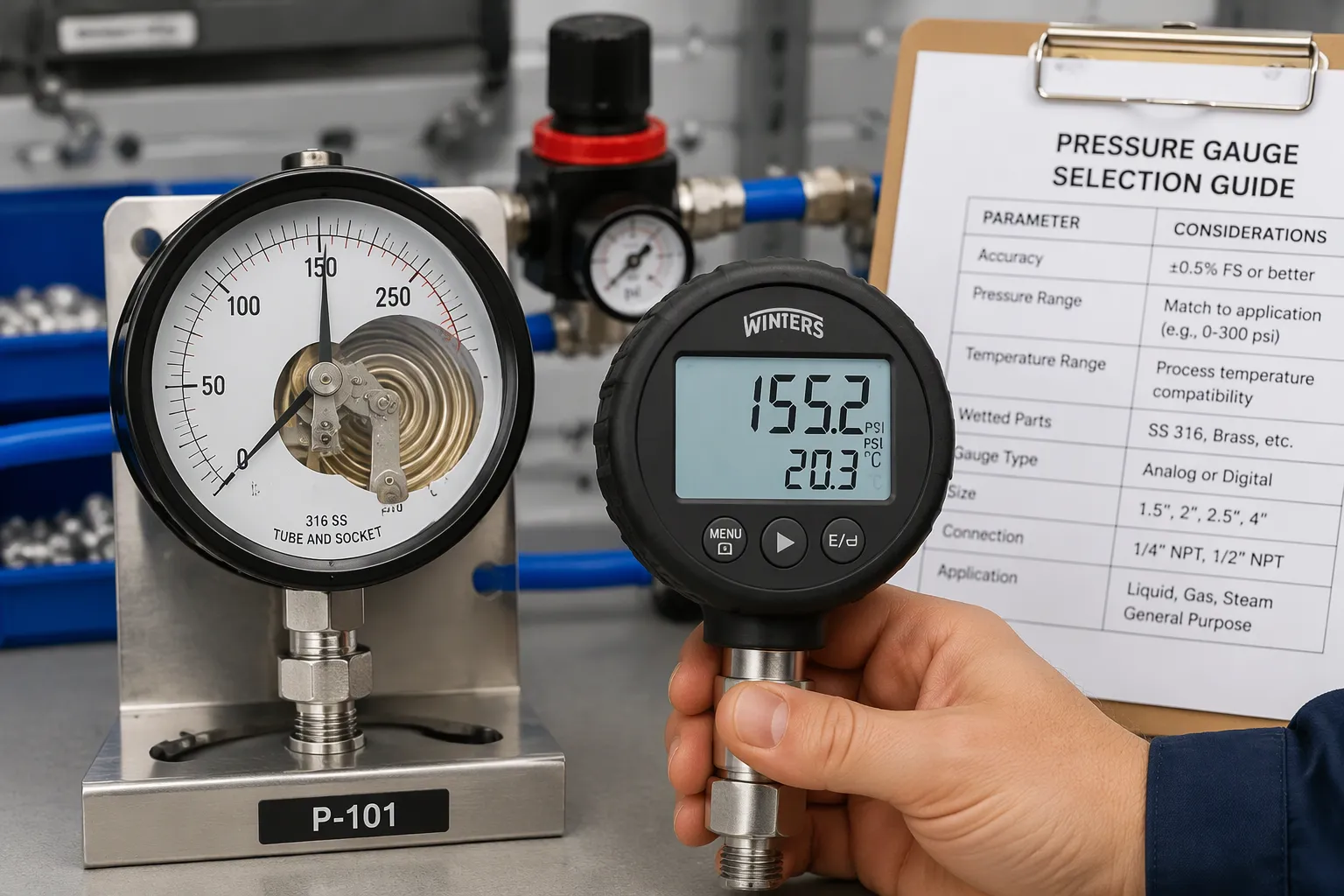
With the requirements recorded, the next decision is the instrument family. Four broad types cover most applications: dial gauges, digital gauges, differential gauges, and sanitary designs. The industrial pressure gauge types guide maps the full family tree; this section summarizes where each type fits.
Dial (Analog) Gauges
Dial gauges remain the standard instrument of industrial measurement. A Bourdon tube, capsule, or diaphragm element deflects under pressure and drives a pointer across a graduated scale. A dial pressure gauge needs no power supply, and the pointer shows trends visibly as pressure changes. These instruments tolerate harsh conditions well, and liquid filling extends their life in vibrating service. They suit pump discharge lines, compressed air, hydraulics, and general plant monitoring. The limitations are modest resolution and the need to read a scale at the mounting point. One more note: a Bourdon tube can take a permanent set after a severe overpressure event, so the range margin chosen in Step 3 matters.
Digital Gauges
Digital gauges convert the sensor signal into an electronic display, with higher resolution, easy reading in low light, and functions such as peak-hold, tare, and data logging. A digital pressure gauge fits test benches, field calibration, and applications where records matter. The trade-offs are cost and dependence on a power source, plus two details worth checking: battery life against the service interval, and the display update rate against the process speed, since a fast-changing pressure can outrun a slow display.
Differential Gauges
A differential pressure gauge measures the difference between two points rather than one line pressure. Filter monitoring, flow across an orifice, and level in closed tanks rely on this principle. Range selection focuses on the expected difference, but the pressure gauge must also be rated for the static line pressure behind it. A low-range capsule element usually resolves a small differential better than a wide-range Bourdon tube, and an equalizing valve protects the element during startup and shutdown.
Sanitary Gauges
Sanitary gauges serve food, beverage, pharmaceutical, and bioprocess lines. They use smooth, crevice-free wetted surfaces and clamp fittings that clean in place, because a standard threaded port can harbor residue. The wetted material must also resist cleaning agents and steam sterilization, and a diaphragm seal usually isolates the element from the product. Design guidance from EHEDG and the 3-A standards gives the cleanability criteria, and material and surface-finish certificates typically travel with the order.
The table below summarizes where each family fits. The full pressure gauge category lists the models behind each row.
Gauge type | Where it fits | Main trade-off |
|---|---|---|
Dial (analog) | General plant monitoring, harsh service, low cost | Modest resolution, local reading only |
Digital | Test work, records, control functions | Cost and power dependence |
Differential | Filter, flow, and level duties | Two-port installation |
Sanitary | Food, beverage, and pharma lines | Specialized connections and documentation |
No single family wins everywhere. The requirements record points to one family, and a shortlist of two or three candidates inside it sets up the technical review in Step 3.
Step 3: Evaluate Technical Factors

The shortlist now meets the hard numbers. Range, accuracy, connection, materials, and environmental ratings decide whether a candidate survives real service. This step turns a plausible choice into a verified one.
Range Sizing: The 25-75% Rule
ASME B40.100 gives the working rule directly. The normal operating pressure should fall in the middle half of the scale, between 25% and 75% of the full-scale span, and the full-scale value should be approximately twice the operating pressure. A pressure gauge running constantly near full scale fatigues early and loses resolution; a gauge running near zero hides small changes in a crowded part of the dial.
Two qualifications complete the rule. In pulsating service, the common industry practice is to keep the operating pressure below 50% of span, because the element cycles continuously and fatigue accumulates faster. And the maximum pressure recorded in Step 1, including spikes, must stay inside the overpressure rating of the instrument, which is specified as a percentage of full scale on the datasheet. Readability follows the same logic: the longer the viewing distance, the larger the dial and the coarser the graduation should be.
Accuracy Class
Accuracy is stated as a percentage of full-scale span, so a wide range at a given class carries a larger absolute error than a narrow range at the same class. Match the class to the decision the reading supports. General monitoring rarely needs better than a standard industrial grade. Test benches and calibration work need a precision pressure gauge with a certified accuracy statement, and custody transfer calls for certified instruments rather than general-purpose dials. Over-specifying adds cost without value; under-specifying produces readings that cannot support the decision.
Connection and Material Compatibility
The connection must mate with the existing port and seal reliably under pressure. Thread standards vary by region and industry, and a mismatch forces adapters that add leak paths. Flanged connections suit larger lines and higher pressures, and hygienic clamps serve sanitary lines. Connection location matters as much as type: lower mount, center back, and panel mount each suit a different installation, and the dial has to face the operator once mounted.
Connection type | Where it fits | Main consideration |
|---|---|---|
Threaded | General industrial ports | Confirm thread standard and size |
Flanged | Large lines, higher pressures | Match flange rating and bolt pattern |
Hygienic clamp | Food, beverage, pharma | Confirm fitting standard |
Every part that touches the medium must resist it. Brass and standard steel serve clean, non-corrosive fluids. Stainless steel covers a broader range of media, and a diaphragm seal extends protection to aggressive, viscous, or crystallizing fluids. Check compatibility against the actual medium, its concentration, and its temperature, because a material that resists a fluid at room temperature may not resist it when hot.
Environmental Durability
The pressure gauge enclosure protects the movement from dust and water, and the IP rating states how well. Outdoor and washdown service calls for a sealed case at IP65 or above. Case materials run from painted steel to stainless steel, with stainless preferred in coastal and marine atmospheres. Window material deserves a line as well: acrylic, polycarbonate, and laminated safety glass differ in impact and chemical resistance.
Vibration, shock, and overpressure act on the element rather than the enclosure. Continuous vibration fatigues the movement, water hammer can damage it in a single event, and the overpressure margin chosen under the range rule decides how much upset the instrument survives. Step 4 covers the options that manage these loads.
Step 4: Select Additional Options
Liquid Filling
Liquid filling dampens the movement and protects it from vibration and pulsation. Glycerin and silicone are the common fills; the fluid absorbs energy that would otherwise fatigue the mechanism, and it lubricates the moving parts. Filled gauges suit pump discharge lines, compressors, and any service with continuous vibration.
Filling carries trade-offs that belong in the specification. The fill fluid must suit the ambient temperature range, because some fluids thicken in cold weather and slow the pointer. A filled case must be vented or sealed correctly, and filling adds weight and cost over a dry unit. Specify filling where vibration or pulsation is actually present; leave the case dry where the service is calm. Marine service adds its own constraints, covered in the dry versus liquid-filled comparison for marine use.
Mounting Style and Orientation
Mounting style determines how the pressure gauge attaches and where the dial faces. A lower-mount stem connects at the bottom of the case for direct pipeline installation. A center-back connection mounts to a panel or bracket with the dial facing the operator, and panel-mount patterns secure the case through a cutout. Orientation affects readability and, on filled units, the position of the fill bubble. Confirm the connection location and dial orientation before ordering, because a mismatch cannot be corrected at installation without adapters.
Snubbers, Siphons, and Diaphragm Seals
Accessories protect the pressure gauge from conditions the base instrument cannot handle alone. A snubber restricts flow into the port and smooths spikes and pulsation, suiting pumps and compressors. A siphon forms a loop that traps condensate, and the water barrier keeps steam heat away from the element. A diaphragm seal isolates the pressure gauge from corrosive, viscous, or crystallizing media. Each solves a distinct problem, and the requirements record says which ones the service needs.
Contacts, Transmitters, and Switches
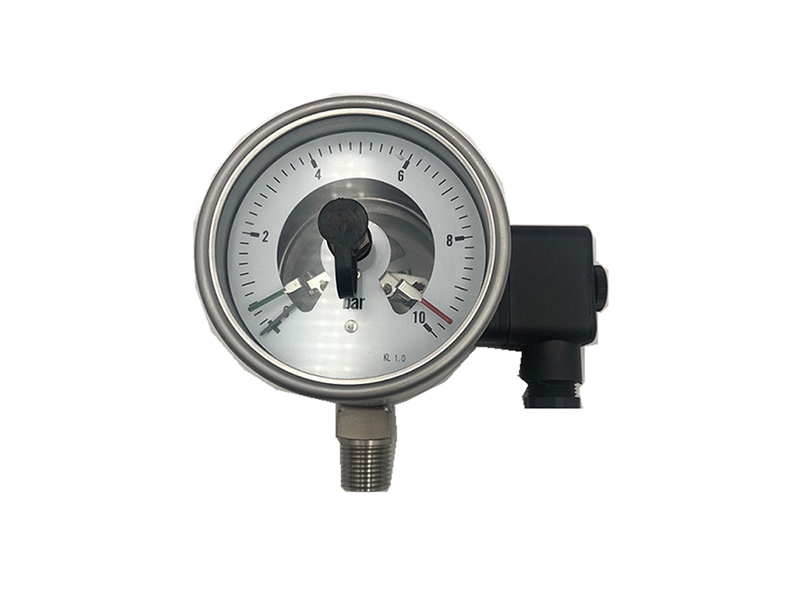
Electrical options turn a gauge into part of a control system. An electric contact pressure gauge opens or closes a circuit at a set pressure and suits alarm and interlock duties. A transmitter converts the reading into an analog signal for remote monitoring and trending. A switch provides a simple on-off signal at a fixed setpoint. Match the option to the control scheme, and confirm the contact rating and signal type against the receiving equipment.
Need the datasheet for a specific range, connection, or filling option? Send the service conditions and we will confirm the model.
Get a QuoteStep 5: Compare and Choose the Right Pressure Gauge
The final step places the shortlisted candidates side by side. Each one has passed the requirements check, the type review, the technical screen, and the options review. What remains is to score them against the record, verify compliance, and weigh cost against service life.
Score the Candidates Against the Record
Work through the requirements record line by line. The range must put normal pressure inside 25% to 75% of span with peaks inside the overpressure rating. The dial size must suit the viewing distance and the panel space. The accuracy class must match the decision the reading supports, and the connection must match the port. A candidate that fails one line fails the screen, however attractive the price.
Confirm Regulatory Compliance
Compliance verification closes the loop opened in Step 1. Each candidate must carry the markings, certifications, and documentation the application requires, and the certificate must cover the exact model, range, and connection being ordered. A certificate for a similar model does not satisfy an auditor. Calibration certificates, material traceability records, and declarations of conformity carry real value at installation and inspection, so list the required documents for each candidate and mark any gap before comparing prices.
Balance Cost Against Total Value
Purchase price is only one part of cost. Service life, calibration interval, replacement price, and downtime all enter the real figure. A low-cost pressure gauge that fails early in pulsating service costs more over two years than a durable unit, while a premium gauge on a calm, clean line may deliver no advantage over a standard model. Match the spend to the duty.
Factor | What to check | Selection guidance |
|---|---|---|
Range | Operating pressure inside 25% to 75% of span | Full scale about twice operating pressure; below 50% of span in pulsating service |
Dial size | Viewing distance and panel space | Larger dials for distance, smaller for tight panels |
Accuracy | Tolerance the decision requires | Precision grade for test work, standard grade for monitoring |
Compliance | Certificates and markings for the application | Must cover the exact model, range, and connection |
Cost | Price plus service life and downtime | Durable units for harsh duty, standard units for calm service |
No candidate wins on every row. The right choice is the one whose profile matches the requirements record most closely, with compliance confirmed before price enters the discussion.
Two Starting Points From the Catalog

PG-16 Safety-Pattern Pressure Gauge
Solid wall between element and window with blow-out back. Stainless steel 304 case, 100 or 150 mm dial, accuracy 1%, ranges to 100 MPa, 130% overpressure rating, IP65.
View product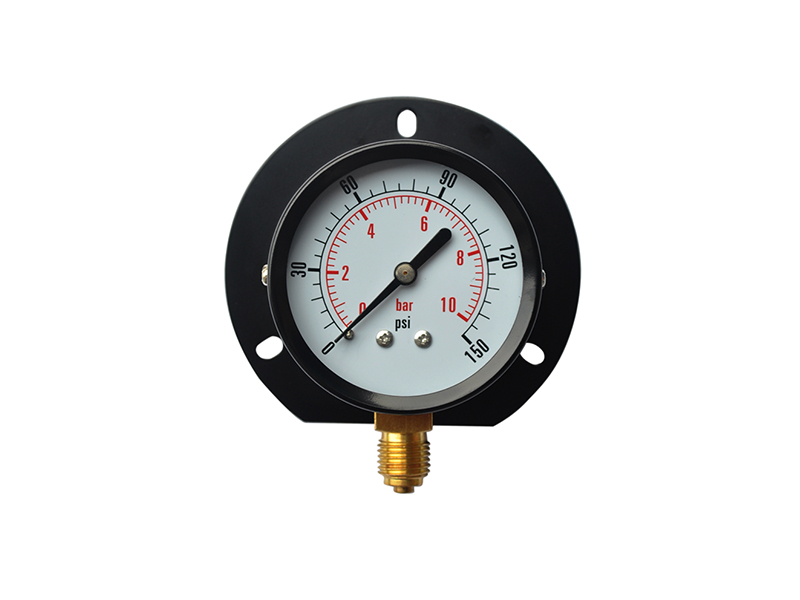
Full Pressure Gauge Range
Dial, differential, electric contact, digital, and sanitary pressure gauge types in one category, with threaded, flanged, and hygienic connections.
View categorySend the medium, the pressure band, the temperature, and the mounting position, and we will size the pressure gauge and confirm the options.
Contact UsConclusion
A dependable pressure gauge comes from a sequence, not from a catalog search. Define the requirements, choose the type, verify the technical factors, add only the options the service needs, and compare the candidates on fit, compliance, and total cost. The five steps take less time than one wrong purchase.
Changzhou KB Instruments & Meter Co., Ltd. manufactures dial, differential, electric contact, digital, and safety-pattern pressure gauges, and the engineering team can confirm a selection against the service conditions described here.
FAQ
How big should the pressure gauge range be compared with the operating pressure?
Per ASME B40.100, keep the normal operating pressure inside the middle half of the scale, between 25% and 75% of span, and choose a full-scale value of roughly twice the operating pressure. Where the service pulsates, keep the operating pressure below 50% of span.
When is liquid filling necessary?
Specify liquid filling where vibration or pulsation is continuous, such as pump discharge lines and compressors. The fill dampens the movement and extends service life. On calm, clean lines a dry pressure gauge performs the same at lower cost and weight.
Which accuracy class should I order?
Match the class to the decision the reading supports. General monitoring works with a standard industrial grade. Test benches and calibration work need a precision grade with a certified statement, and custody transfer needs certified instruments rather than general-purpose dials.
What is the difference between a snubber and a siphon?
A snubber restricts flow into the port and smooths pressure spikes and pulsation. A siphon traps condensate in a loop, and the water barrier keeps steam heat away from the element. They solve different problems and are often combined.
Can one pressure gauge handle a high static line pressure and a small differential?
Yes, provided the instrument is rated for the static line pressure while its scale resolves the small differential. A low-range capsule element usually serves this duty better than a wide-range Bourdon tube, and an equalizing valve protects the element during startup.
What does an IP rating tell me about a pressure gauge?
The IP rating states how well the enclosure keeps out dust and water. Outdoor and washdown service calls for a sealed case at IP65 or above, while a sheltered indoor panel can accept less.
Sources
Range selection and gauge construction practice: ASME, B40.100 Pressure Gauges and Gauge Attachments. The 25% to 75% operating band and the twice-operating-pressure rule follow ASME B40.100 section 4.3.1; the 50% limit for pulsating service is common industry practice. Hygienic design guidance: EHEDG. PG-16 case, dial, accuracy, and overpressure figures: PG-16 product datasheet on this site.
I want to comment

Recent News
1.How to check whether the pressure gauges of commonly used water-based, carbon dioxide and dry powder fire extinguishers are normal?
2021-01-132.What is an OEM pressure sensor?
2020-08-043.What Should You Look for in a Pressure Gauge Supplier?
2026-09-194.Who Are the Best Pressure Gauge Manufacturers and Pressure Gauges Suppliers in 2026?
2026-09-17




View More(Total0)Comment lists