



Dry vs. Liquid-Filled Pressure Gauges: How to Choose for Marine Use
 Sep 24, 2026|
 View:5
The primary difference between dry and liquid-filled pressure gauges is vibration damping. Liquid-filled gauges use glycerin or silicone oil to stabilize the pointer, extending service life by up to 5x in high-vibration marine and industrial hydraulic systems. Dry gauges offer a lower upfront cost and faster response times, making them ideal for stable, clean, indoor environments. With over 15 years of manufacturing expertise, Changzhou KB Instruments provides this definitive guide to help engineers and ship chandlers select the correct gauge based on pulsation, temperature, and IMPA marine standards.
Key Takeaways
Choose liquid-filled gauges for high-vibration or pulsating systems to extend gauge life.
Select dry gauges for stable, clean, and cost-sensitive applications to save money.
Liquid-filled gauges resist corrosion and moisture in marine and harsh environments.
Match your gauge to the operating conditions for reliable performance and cost savings.
Consider temperature, pressure ranges, and IMPA codes when selecting a gauge for marine needs.
How Each Gauge Type Works
Dry Gauge Construction
A dry pressure gauge contains air inside the case. The sensing element, typically a Bourdon tube, connects to a gear train and pointer. No damping fluid surrounds these components. This simple design keeps manufacturing costs low. The gauge functions adequately in stable environments without vibration or pulsation, often compliant with general industrial standards like ASME B40.100 or EN 837-1.
Typical applications for dry pressure gauges include air compressors, HVAC equipment, and general industrial settings where cost is the primary factor. Cost-sensitive buyers often select this type for its simplicity. The dry gauge performs well when pressure changes remain gradual and conditions stay clean and dry. However, several limitations exist. Moisture can accumulate inside the case and obstruct dial visibility over time. Temperature drops may damage the Bourdon tube or diaphragm. Pressure surges can burst the gauge instantly. Moving parts also experience vibration and internal friction without any damping.
Engineers commonly choose dry pressure gauges for indoor machines. These dry pressure gauges prioritize affordability over precision under dynamic loads. The measurement range matches liquid-filled models, but accuracy degrades with fluctuating pressure.
Liquid-Filled Gauge Construction
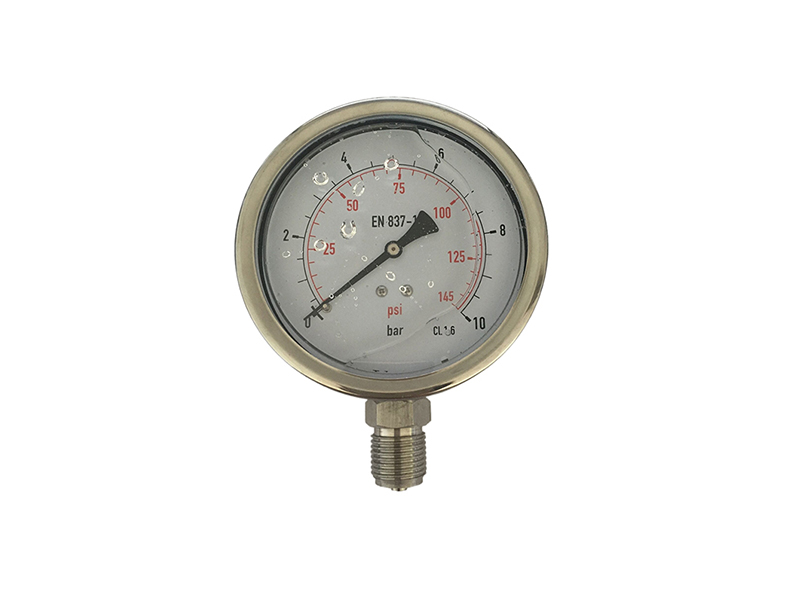
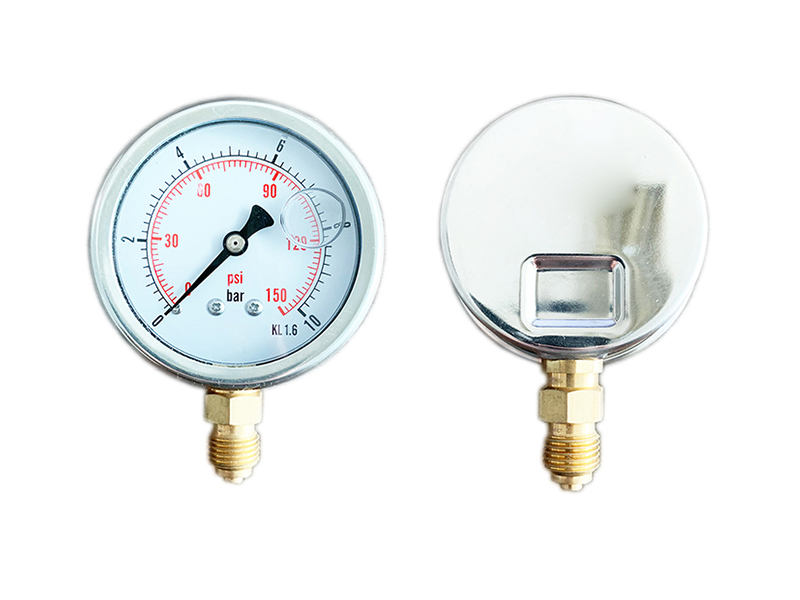
Liquid-filled gauges contain glycerin or silicone oil inside the case. The fill fluid completely surrounds the movement and dial face. This design effectively damps pointer flutter caused by vibration and pressure spikes. Liquid-filled gauges significantly extend service life in demanding industrial and marine environments.
The fill fluid choice affects performance. Glycerin provides good damping from -20°C to +60°C. Below 17°C, it becomes viscous and slows pointer response. Pure glycerin may freeze near -20°C. A glycerin-water blend extends operation down to -46°C. Silicone oil offers superior performance from -40°C to +80°C. It maintains consistent viscosity across extreme temperatures. Specialty fluids serve cryogenic conditions down to -70°C.
Filling Fluid | Temperature Range | Damping Characteristics |
|---|---|---|
Glycerin | -20°C to +60°C | Good damping; viscous below 17°C |
Silicone Oil | -40°C to +80°C | Consistent across extremes |
Specialty Fluids | Down to -70°C | For cryogenic or reactive conditions |
A liquid filled gauge provides better effective readability than dry versions under dynamic conditions. The movement operates in a liquid filled case for effective damping. The system is liquid filled to prevent corrosion from moisture ingress. Liquid filled gauges are sealed airtight. Marine operators rely on liquid filled gauges for harsh environments.
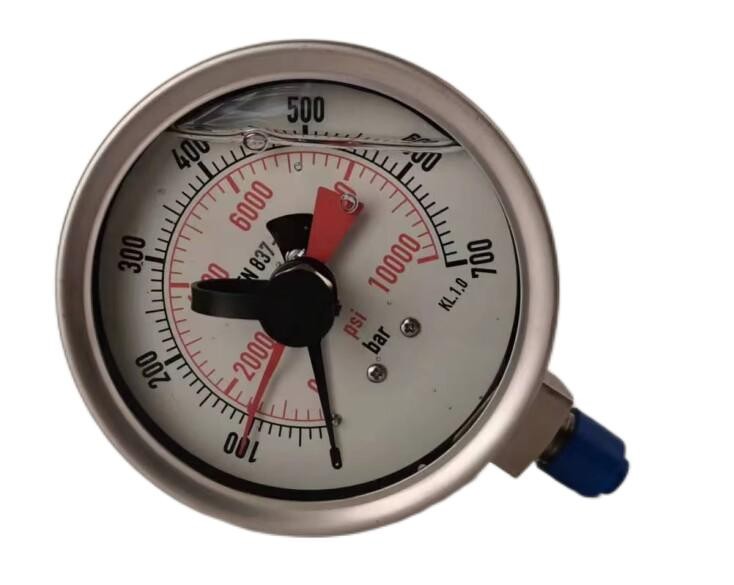
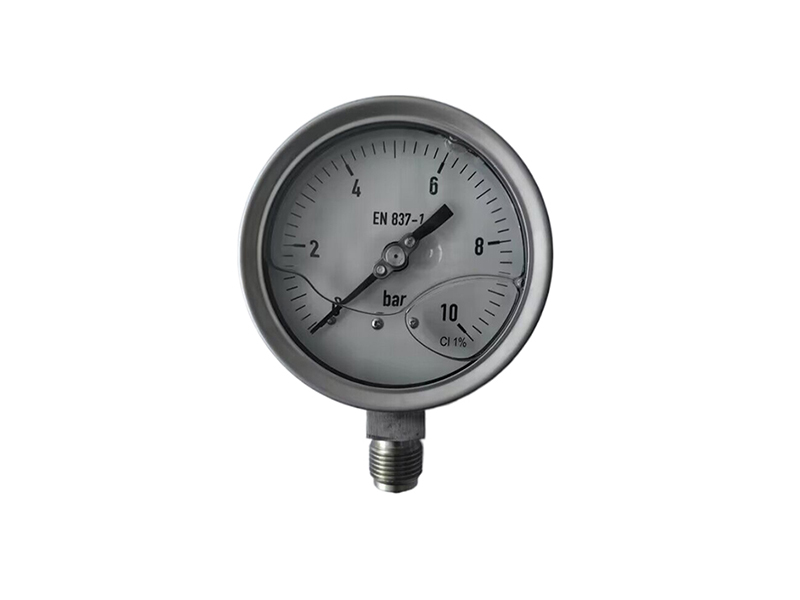
KB Instruments offers standard liquid fillable gauges and oil-filled gauges with record pointers. These liquid-filled pressure gauges suit marine and heavy machinery applications. They deliver accurate readings despite vibration or pulsation in the system. Liquid-filled pressure gauges use corrosion-resistant materials like stainless steel for harsh outdoor conditions. Marine environments require this level of protection for reliable long-term operation.
Dry vs. Liquid-Filled Pressure Gauges: Key Differences
Vibration and Pulsation Damping
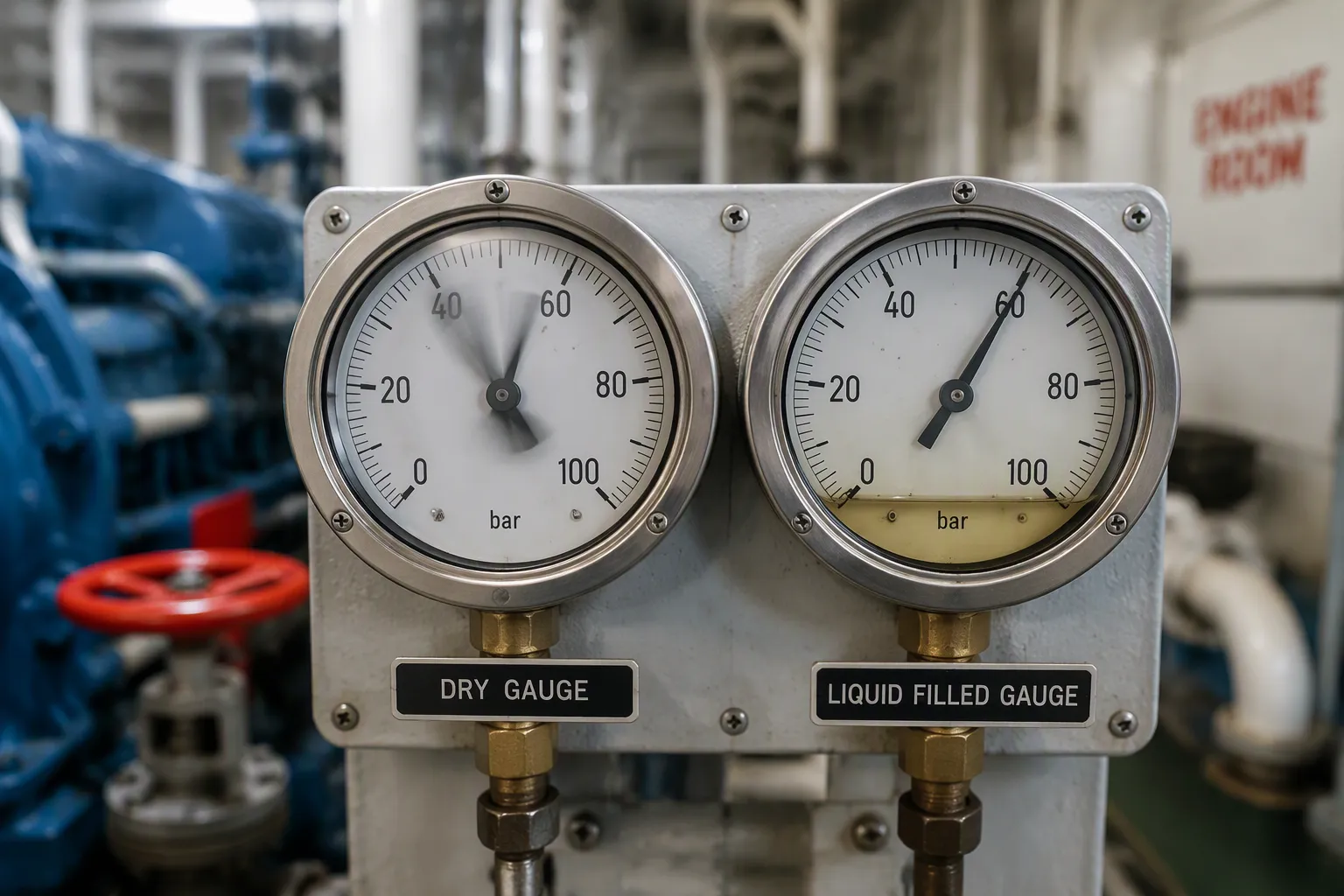
The most significant difference between dry vs. liquid-filled pressure gauges lies in how each handles vibration and pulsation. A liquid-filled pressure gauge contains a damping fluid such as glycerin or silicone oil. This fluid acts as a cushion that stabilizes the gauge needle, making readings easier in conditions with pulsation and vibration. It also lessens the effect of sudden pressure spikes that could otherwise cause inaccurate readings or damage the gauge.
The fill surrounds the movement and pointer assembly, creating resistance to rapid motion. In practical terms, the fluid acts like a shock absorber.
The core advantages of liquid-filled pressure gauges become clear in demanding settings. The fill fluid adds drag to the pointer and movement assembly, slowing rapid oscillations so the pointer settles into a stable position instead of fluttering, while still responding to genuine pressure changes. The liquid reduces metal-on-metal impacts inside the gauge, lessening mechanical shock on the movement and extending service life. By smoothing the pointer response, the fill fluid reduces the severity of oscillation caused by repeated flexing of the sensing element under pressure pulsation. Sealed liquid-filled cases also limit humid air exchange, reducing internal condensation and fogging, which improves readability and slows corrosion.
Dry pressure gauges lack this protection entirely. Their moving parts experience vibration and internal friction without any damping. In a high-vibration environment, a dry gauge pointer may flutter continuously, making accurate readings nearly impossible. The constant oscillation accelerates wear on the gear train and Bourdon tube.
Liquid-filled pressure gauges can extend gauge life by up to 5× compared to dry gauges in high-vibration environments, because the fill fluid (glycerin or silicone oil) dampens pointer oscillation and maintains readability under harsh conditions.
This lifespan advantage matters for maintenance budgets. A liquid gauge over a dry gauge often pays for itself through reduced replacement frequency. The excellent vibration damping and pulsation resistance of liquid-filled gauges justify the higher upfront cost in dynamic systems.
Accuracy, Durability, and Cost
Accuracy requirements vary by application. While the physical accuracy class (e.g., EN 837-1 Class 1.6) is determined by the Bourdon tube and movement quality, a liquid filled gauge provides superior effective readability under fluctuating pressure. The movement operates in a liquid filled case for effective damping. This design maintains reading stability when pressure changes rapidly. Dry pressure gauges perform adequately when pressure remains steady and conditions stay clean.
Durability favors liquid-filled gauges in harsh conditions. The sealed case prevents moisture ingress and corrosion. Liquid filled gauges are sealed airtight. This construction delivers a lower failure rate in demanding industrial and marine environments. Dry gauges remain vulnerable to internal condensation and temperature damage over time.
Cost structure differs between the two types. Dry pressure gauges cost less to manufacture because they contain no fill fluid and require simpler sealing. Procurement staff often select dry gauges for budget-driven projects with stable operating conditions. Liquid-filled pressure gauges carry a higher unit price but reduce long-term replacement and downtime costs. Sourcing direct from a manufacturer with 15+ years of experience, like KB Instruments, eliminates middleman markups often found with trading companies, making high-quality liquid-filled gauges more accessible.
Pressure Range Type | Range (psi) |
|---|---|
Vacuum | -30 inHg to 0 |
Compound (example) | -30 inHg to 0 to 15, 30, 60, 100, 160, 200, 300 |
Positive (low) | 0 to 15, 30, 60, 100, 160, 200, 300, 400, 600 |
Positive (medium) | 0 to 800, 1000, 1500, 2000, 3000, 5000, 6000 |
Positive (high) | 0 to 10,000, 15,000, 20,000 |
Both dry and liquid-filled gauges are available in the same pressure ranges. The liquid-filled vs. dry pressure gauges decision therefore rests on operating conditions rather than measurement capability. Engineers should evaluate vibration environment adaptability and accuracy needs before specifying either type. The liquid vs dry pressure gauge choice ultimately depends on matching construction to the application's demands.
When to Choose Liquid-Filled Pressure Gauges
High-Vibration and Pulsating Systems
Equipment that generates constant motion or rapid pressure swings demands a liquid filled gauge. Pumps, compressors, and rotating equipment produce continuous vibration that causes dry gauge pointers to flutter. Hydraulic and pneumatic systems with rapid pressure changes create pulsation that accelerates internal wear. A liquid filled gauge absorbs this mechanical shock through its fill fluid.
Pumps
Compressors
Rotating equipment
Pulsation-heavy systems such as hydraulic and pneumatic circuits
The core advantages of liquid-filled pressure gauges become evident in these settings. The damping fluid stabilizes the pointer, so technicians can read pressure values without guesswork. Vibration environment adaptability improves because the fill fluid cushions the Bourdon tube and gear train. A liquid-filled pressure gauge also resists the fatigue that destroys dry movements in high-vibration environments. Maintenance teams near engines and reciprocating machinery should specify liquid-filled gauges for dependable service.
Corrosive, Damp, or Dusty Environments
Marine and seaport conditions represent the most demanding use case for liquid-filled gauges. Saltwater accelerates corrosion on metal housings, connectors, and internal components. Moisture migrates into unsealed cases and causes condensation, which clouds the dial and degrades accuracy. A sealed liquid filled gauge blocks humid air exchange and protects the movement from these threats.
Saltwater is highly corrosive due to the presence of salts, mainly sodium chloride. These salts can cause all sorts of problems for the components of a water pump pressure sensor. The most obvious issue is corrosion.
Chemical processing, petroleum refining, pharmaceutical manufacturing, and metallurgical applications also expose gauges to aggressive media and washdown conditions. Liquid filled gauges serve hydraulic systems, offshore platforms, and heavy industrial environments where dust and moisture coexist. These instruments maintain measurement stability during vessel motion and support predictive maintenance strategies. Operators in harsh industrial environments rely on liquid-filled gauges to prevent costly downtime and extend service intervals.
When a Liquid vs Dry Pressure Gauge Fits Best
Stable, Clean, Cost-Sensitive Applications
Dry pressure gauges suit clean, dry indoor environments and budget-driven setups. A dry gauge is the simplest instrument to manufacture. It uses a painted steel case, a glass window, and a brass or copper alloy movement. No sealing or filling steps are required. This simplicity keeps the unit purchase price low. For high-volume OEM panels where pressure is steady, spending more on fill buys nothing.
The cost verdict for stable, clean applications favors dry pressure gauges. They deliver the lowest total cost of ownership. Fitting liquid-filled gauges across thousands of stable panel points inflates project cost with zero reliability gain. On a stable, low-pulsation line, a quality dry gauge commonly serves for many years without issue. Industries such as HVAC systems, general industrial pneumatic controls, indoor water pressure monitoring, and laboratory test equipment rely on dry pressure gauges for dependable service.
Reverse the logic for calm applications: fitting liquid filled gauges across thousands of stable panel points inflates project cost with zero reliability gain.
Cost Consideration
Dry Gauge
Liquid-Filled Gauge
Unit purchase price
Lower
Higher
Stable line, panel-mounted (12 months)
1 unit, no replacements
More than needed
High-volume OEM panels
Most economical
Inflates project cost
Overall cost verdict
Winner
Not recommended
Readability and Maintenance Trade-Offs
Readability differs between the two types. A dry pressure gauge performs best under stable pressure conditions. Its readability is not enhanced against vibration or pulsation. A liquid-filled gauge dampens vibration and pressure pulsation. This damping improves readability in less stable installations. Some models with a laminated safety glass or polycarbonate lens eliminate the air gap for further improved readability and impact resistance.
Maintenance requirements also vary. Dry gauges need periodic inspection for moisture accumulation and internal condensation. Liquid-filled gauges are sealed airtight, which limits humid air exchange and slows corrosion. This sealed construction supports stable readings over longer service intervals. However, liquid-filled gauges cost more upfront and may not justify that expense in calm, clean settings. Procurement staff should match gauge type to actual operating conditions rather than defaulting to the more expensive option.
Industrial Pressure Gauge Selection Guide
This industrial pressure gauge selection guide frames the choice around load behavior and site conditions. Industrial systems rarely hold one pressure value forever. Pumps cycle, valves shift, and compressors load and unload. Each event changes what the gauge must survive.
Steady vs. Pulsating Loads
Pulsation differs from vibration. It consists of rapid, regular pressure fluctuations within the measured media. A steady system holds pressure near its operating point. A fluctuating system moves repeatedly through a band. Common causes include pump pulsation, rapid valve shifts, unloader cycling, compensator hunting, and machine shock.
Watch for visible signs of pulsation:
The pointer moves quickly or flutters instead of holding a consistent reading.
Intense pulsation can break or loosen the pointer.
Readings become unreliable, internal wear accelerates, and accuracy degrades over time.
Range selection must preserve readability and headroom. Consider a warm normal pressure of 145 bar, repeated fluctuation to 170 bar, and a protected short event at 190 bar. A 0–160 bar gauge fails because normal pressure sits at 90.6% of full scale. A 0–250 bar gauge is a stronger starting point: normal at 58%, repeated high at 68%, short event at 76%. A 0–400 bar gauge adds headroom but worsens resolution.
Accuracy class converts to absolute error. Class 1.6 on a 0–250 bar gauge permits about ±4.0 bar. The same class on a 0–400 bar gauge permits about ±6.4 bar. The wider gauge serves tight adjustment at a 100 bar reading poorly.
Liquid fill dampens pointer motion and lubricates the movement. It improves readability and wear resistance under vibration or pulsation. It does not stop pressure spikes. A snubber, restrictor, or remote line may still be needed. Severe pulsation often requires both liquid fill and a snubber. KB Instruments supplies precision test gauges, process gauges, and high-pressure gauges for these duties.
Temperature and Cleanroom Conditions
Temperature affects fill fluid behavior and internal condensation. Glycerin becomes viscous in cold conditions and slows pointer response. Silicone oil maintains consistent viscosity across extreme temperatures. Cleanroom and pharmaceutical settings demand sealed construction that limits particle ingress and humid air exchange.
For stable, clean indoor panels, dry pressure gauges remain the economical choice. For washdown, dust, or temperature swings, specify liquid-filled gauges with stainless steel cases. Confirm the manufacturer's steady, fluctuating, and short-time limits before purchase. If measured spikes exceed the gauge limit, add protection or redesign the measurement arrangement.
Marine Hydraulic System Considerations
Shock, Roll, and Constant Motion
Vessels operate under continuous motion. A hydraulic system aboard a ship experiences roll, pitch, and engine vibration at the same time. These forces attack gauge internals without pause. A dry gauge pointer flutters constantly under such conditions. The gear train wears rapidly. Readings become unreliable within a short service window.
Liquid-filled gauges solve this problem through their damping fluid. The fill absorbs mechanical shock and stabilizes the pointer against vessel motion. A liquid filled gauge maintains readable pressure values even during heavy seas. Marine hydraulic systems on deck cranes, winches, and steering gear depend on this stability. KB Instruments supplies nautical clocks, barometers, and marine-oriented instruments alongside its pressure gauge range. This marine focus informs the design of their liquid-filled gauges for seaport and vessel duty.
Saltwater and Corrosion Resistance
Saltwater destroys ordinary gauge materials. Steel and brass cases corrode quickly when exposed to salt spray. A stainless steel case resists this attack far better than regular steel. Marine operators should specify corrosion-resistant liquid-filled gauges with sealed cases for deck and engine room installations.
Material selection must be divided into case materials and wetted parts to ensure long-term reliability. Case materials typically use 316L stainless steel for excellent rust resistance in marine environments. For highly corrosive media, wetted parts or diaphragm seals (compliant with EN 837-3) utilize exotic alloys to protect instrument integrity:
Titanium: forms a passive oxide layer that protects against corrosion in harsh marine environments.
Nickel alloys (Monel® and Inconel®): highly resistant to saltwater corrosion, common in marine engineering.
Hastelloy® and Tantalum: used for diaphragms and seals to protect against aggressive chemicals and seawater.
Saltwater contains a high concentration of salt, which can cause metals to rust and corrode over time. A gauge with a stainless-steel case is more likely to withstand the corrosive effects of saltwater compared to one made of regular steel.
Liquid-filled gauges with 316 stainless steel construction deliver the durability marine hydraulic systems require. The sealed case blocks humid air exchange and slows internal corrosion. This combination of liquid fill and corrosion-resistant materials extends service life in seaport conditions.
For global ship chandlers and marine procurement teams, matching gauges to IMPA codes (International Marine Purchasing Association) is critical. KB Instruments manufactures marine-oriented instruments compliant with IMPA 37 (Nautical Equipment) and IMPA 65 (Measuring Tools) standards, ensuring seamless integration into global vessel supply chains. Furthermore, sourcing direct from a manufacturer with 15+ years of experience eliminates middleman markups often found with trading companies, making high-quality liquid-filled gauges more accessible for large-scale marine fleets.
Liquid-Filled vs. Dry Pressure Gauges: Decision Checklist
Quick-Reference Comparison Table
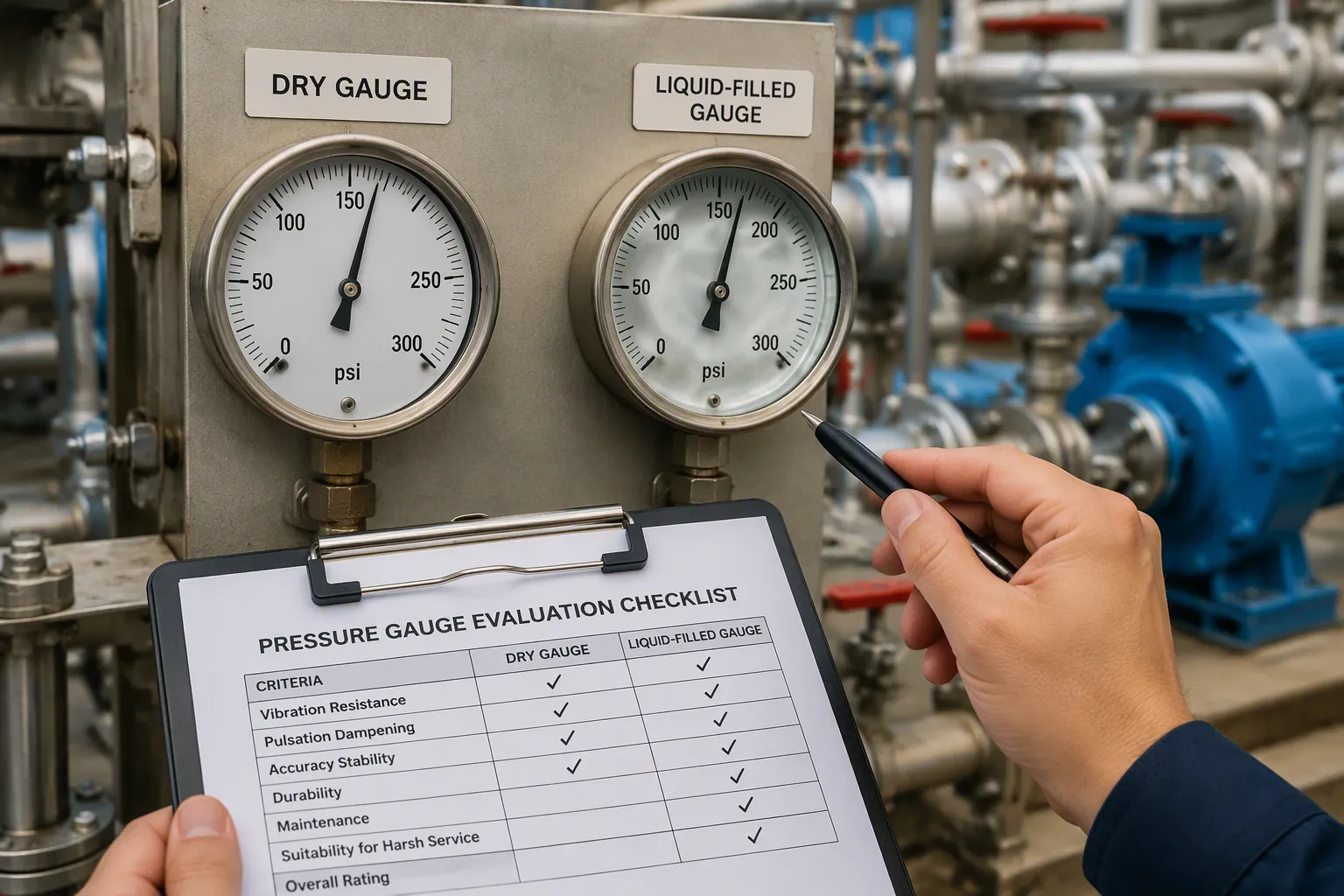
The liquid-filled vs. dry pressure gauges comparison below summarizes the key selection dimensions. Engineers and procurement staff can use this table to match gauge type to operating conditions quickly.
Feature | Dry Pressure Gauges | Liquid-Filled Pressure Gauges |
|---|---|---|
Structure | No liquid filling; simple design | Liquid-filled; more complex design |
Cost | Lower | Higher |
Response Speed | Fast | Relatively slower |
Effective Readability (Under Vibration) | Poor (Pointer flutters) | Excellent (Pointer stable) |
Suitable Environment | Stable conditions with low vibration | High vibration and frequent pressure fluctuations |
Vibration Resistance | Vulnerable to vibration | Helps reduce vibration effects |
Protection | None | Lowers wear and corrosion; extends service life |
Temperature Adaptability | Excellent (No fluid viscosity issues) | Depends on fill fluid limits (e.g., Glycerin vs. Silicone) |
The table reveals a clear pattern. Liquid-filled gauges win on vibration resistance, reading stability, and durability. Dry pressure gauges win on purchase price and temperature extremes. Neither type dominates every category. The right pressure gauge depends on which factors matter most for the specific installation.
Step-by-Step Selection Checklist
Before choosing a pressure gauge, work through the following steps. Each question narrows the field toward the correct gauge for the application.
Identify the pressure source. A pump, compressor, or hydraulic circuit produces pulsation and vibration. Select a liquid filled gauge for these dynamic systems.
Assess the installation environment. Equipment mounted outdoors, exposed to wash-down, or located in humid conditions requires a liquid-filled gauge. Sealed construction blocks moisture ingress and slows corrosion.
Observe the existing gauge behavior. Pointer flutter or sticking indicates vibration problems. A liquid-filled gauge dampens this movement and protects the internal mechanism.
Check the ambient temperature range. Standard glycerin-filled gauges are rated -20°C to +60°C. Silicone-filled gauges handle -40°C to +80°C. For extreme ambient temperatures, consider remote mounting with a diaphragm seal and capillary line.
Evaluate media compatibility. Brass wetted parts suit water, air, and non-aggressive liquids or gases. Sour gas, ammonia, and harsh chemicals require corrosion-resistant materials like stainless steel or Monel®. For clogging media, a diaphragm seal provides a physical barrier.
Confirm the fill fluid for reactive media. Glycerine is the standard fill for non-oxidizing environments. Silicone serves larger temperature extremes. Halocarbon® suits oxidizing agents such as chlorine, oxygen, and hydrogen peroxide.
Review application-specific requirements. Lead-free construction suits drinking water. UHP design serves semiconductors. Hygienic design fits sanitary processes.
Match the gauge to the budget. Stable, clean indoor panels with rock-steady pressure favor dry pressure gauges. High-vibration equipment and harsh marine conditions justify the higher cost of liquid-filled gauges.
A persistent myth says the fill fluid improves accuracy or changes calibration. It does not. Accuracy is set by the Bourdon tube quality and the movement class rating. What fill improves is readability on vibrating machines and service life of the movement. The fill fluid does exactly three jobs: it dampens pointer oscillation, it lubricates the pinion and bearing points, and it seals the case against internal condensation.
For severe pressure fluctuation or pulsation, combine liquid fill with a restrictor or snubber. Liquid-filled gauges increase service life under these conditions. This combination delivers the best protection for demanding industrial and marine systems.
Final Verdict: Which Gauge Should You Specify?
Specify Liquid-Filled Gauges when dealing with pumps, compressors, marine hydraulics, or any environment with high vibration, pulsation, or moisture. The 3x to 5x lifespan extension easily justifies the initial investment.
Specify Dry Gauges for static, clean, indoor OEM panels where pressure is steady and budget constraints are tight. They offer the lowest total cost of ownership for stable applications.
Need help matching your application to the correct IMPA-coded marine instrument or industrial gauge? Contact Changzhou KB Instruments & Meter Co., Ltd. today to request a free Marine Gauge Sizing Guide or a custom quote for your next ship chandler order.
FAQ
Does liquid filling change the accuracy class of a pressure gauge?
No. Accuracy comes from the Bourdon tube quality and the movement class rating (e.g., EN 837-1). The fill fluid does not alter calibration. It dampens pointer oscillation, lubricates the pinion and bearing points, and seals the case against internal condensation.
Which fill fluid suits cold marine environments?
Silicone oil performs from -40°C to +80°C. Glycerin becomes viscous below 17°C and may freeze near -20°C. A glycerin-water blend extends operation down to -46°C. Marine operators in cold climates should specify silicone fill for consistent pointer response.
Can a dry gauge survive on a ship deck?
No. Constant roll, pitch, and engine vibration cause pointer flutter and rapid gear train wear. Salt spray corrodes steel and brass cases. A sealed liquid-filled gauge with a 316 stainless steel case handles these conditions far better.
When does a snubber accompany liquid fill?
Severe pulsation often requires both. Liquid fill dampens pointer motion and lubricates the movement. It does not stop pressure spikes. A snubber, restrictor, or remote line protects the gauge when measured spikes exceed its limit.
I want to comment
Recent News
1.Oil Filled Pressure Gauge Pros and Cons Explained Simply
2026-03-262.How accurate are oil gauging tapes for measuring the level of oil in tanks?
2023-09-053.How to use Oil Gauging Tapes properly?
2023-01-174.Oil-Filled Pressure Gauges: The Ultimate Solution for Harsh Industrial Environments
2025-07-225.Top 10 Oil Filled Pressure Gauge Suppliers and Manufacturers in China 2026
2026-01-23




View More(Total0)Comment lists